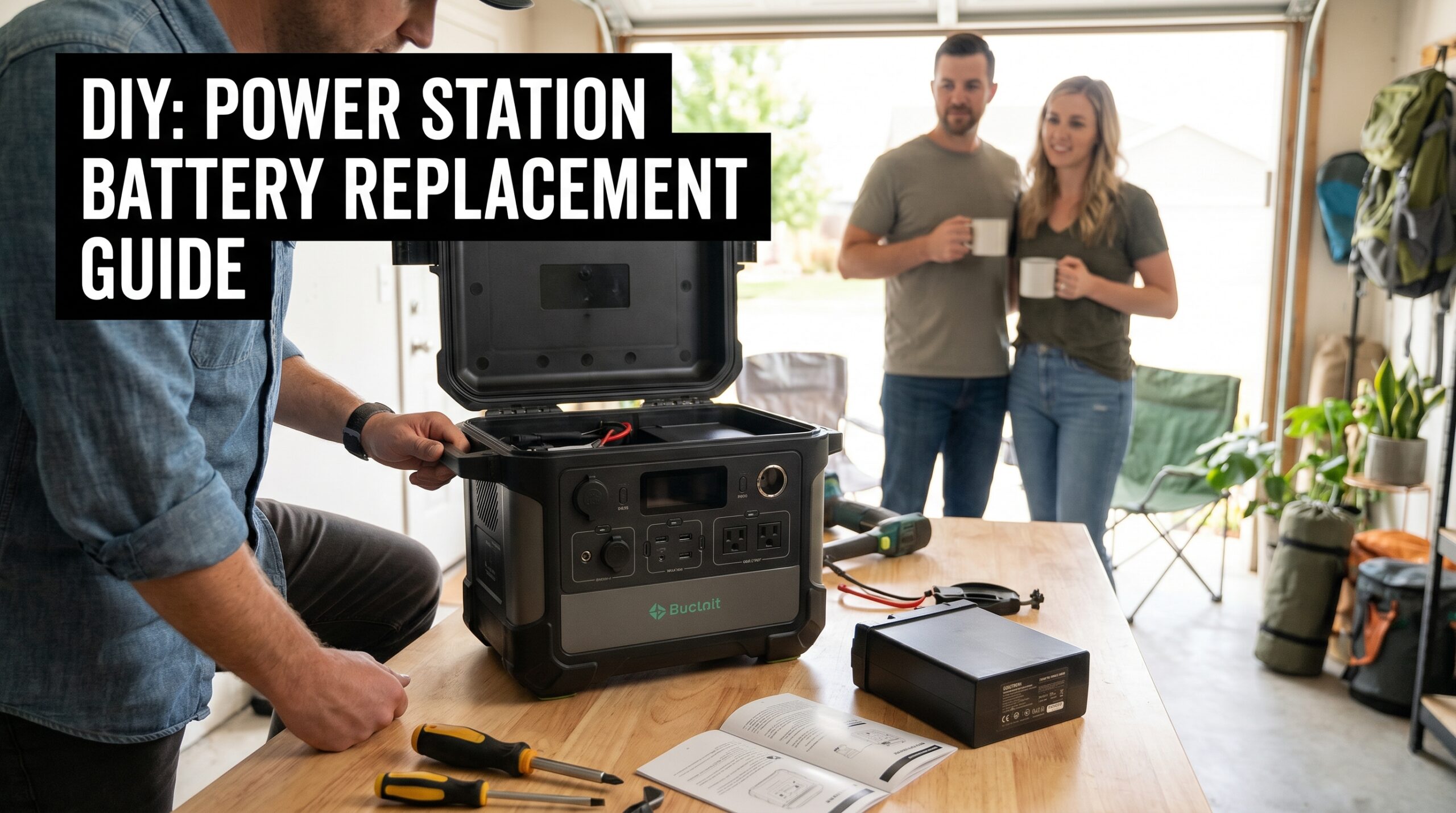
You press the power button on your trusted portable power station, expecting the familiar glow of the display and the steady hum of backup electricity. Instead, you get a blinking error code, a rapid capacity drop, or worse—complete silence. After months or years of reliable service, the battery has finally degraded beyond usefulness. Your first instinct is to replace it, just like you would a car battery or a laptop cell. But then you check the manufacturer’s website, call customer support, or browse third-party forums, and reality hits: portable power station battery replacement isn’t straightforward, and the cost can range from surprisingly affordable to outright prohibitive. Before you spend a single dollar, you need to understand the real numbers, the hidden variables, and whether swapping the battery actually makes financial sense. This guide cuts through the marketing fog and warranty fine print to give you a clear, data-backed breakdown of portable power station battery replacement costs, what drives those prices, and exactly when replacement is the smart move versus when it’s time to upgrade.
Table of Contents
The Reality Check: Can You Even Replace It?
Before discussing cost, it’s critical to address a fundamental truth: most modern portable power stations are not designed for user-replaceable batteries. Manufacturers seal the units to improve durability, reduce internal wiring complexity, and ensure the Battery Management System (BMS) communicates flawlessly with proprietary cell configurations. While a handful of modular or industrial-grade models allow battery swaps, the vast majority of consumer units require either an official manufacturer service, a certified third-party repair, or a complete unit replacement. This design philosophy directly impacts replacement pricing, labor feasibility, and your overall options. If your unit is fully sealed, you’re not just buying a battery pack; you’re paying for disassembly, recalibration, safety testing, and reassembly.
Average Replacement Cost Ranges
If your unit is eligible for official or professional battery replacement, expect costs to scale directly with capacity, chemistry, and service type. Entry-level stations (200–500Wh) typically run $80–$180 for a replacement battery module or basic service fee. Mid-range units (500–1,000Wh) generally fall between $150–$350, while high-capacity models (1,000–2,000Wh+) can command $250–$600 or more. These figures usually include the battery pack itself, BMS recalibration, and standard labor. However, prices fluctuate based on regional availability, shipping surcharges, and whether the manufacturer still actively supports the model. Third-party repair shops often charge 15–30% less than official service centers, but they may use non-OEM cells, lack firmware integration, or void remaining warranties. DIY cell replacement, while technically possible for experienced electronics hobbyists, rarely drops below $100 when factoring in quality LiFePO₄ or Li-ion cells, spot welders, replacement BMS boards, insulated tools, and safety equipment. For most users, professional service remains the only viable path.
What Affects Price
Replacement pricing isn’t arbitrary. It’s driven by a combination of engineering constraints, logistics, and market dynamics. First, proprietary design plays a massive role. Manufacturers that use custom-shaped cells, integrated BMS firmware, or permanently glued/shrink-wrapped packs force buyers into official channels, eliminating competitive pricing and third-party alternatives. Second, labor and certification costs add up quickly. Replacing a high-voltage lithium pack requires trained technicians, proper disposal of degraded cells, and post-replacement load testing to ensure safe operation under surge conditions. Third, shipping and hazardous material transport regulations significantly impact final pricing. Heavy battery modules must comply with UN38.3 and DOT guidelines, adding packaging, labeling, and carrier surcharges that manufacturers pass directly to consumers. Fourth, economies of scale matter. Popular models with high production volumes often have cheaper replacement parts due to bulk sourcing, while discontinued or niche units face premium pricing due to low inventory and custom manufacturing runs. Finally, regional warranty laws, recycling mandates, and environmental compliance fees can add administrative overhead that subtly inflates replacement quotes.
Li-ion vs LiFePO₄ Differences
Battery chemistry fundamentally shapes replacement cost, frequency, and long-term value. Standard lithium-ion (Li-ion) cells, common in older or budget-friendly stations, offer higher energy density at a lower upfront cost but degrade faster, typically lasting 500–1,000 cycles before hitting 80% capacity. Replacing a Li-ion pack is usually cheaper initially, but you’ll likely face replacement sooner, increasing lifetime expenses. Lithium iron phosphate (LiFePO₄) batteries, now standard in premium models, cost 20–40% more per replacement due to stricter manufacturing tolerances, heavier cell construction, and advanced thermal management requirements. However, they deliver 2,000–3,500+ cycles, maintain capacity longer, and operate more safely under stress. From a replacement cost perspective, LiFePO₄ units may seem expensive upfront, but their extended lifespan drastically reduces the frequency of replacements, lowering the long-term cost per year. Additionally, LiFePO₄ cells are less prone to thermal runaway, making third-party replacements safer, more widely available, and easier to certify. When evaluating replacement quotes, always confirm the chemistry. A cheaper Li-ion swap might save $50 today but cost you $200 in premature replacements over five years.
Brand/Manufacturer Policies
Not all companies handle battery replacement the same way, and their policies directly impact your out-of-pocket costs and long-term usability. EcoFlow offers official battery replacement programs for select Delta and River series models, with out-of-warranty service typically ranging from $150–$400 depending on capacity and regional service center availability. Jackery historically designs sealed units with limited official replacement options, often recommending full unit replacement once capacity degrades, though certified third-party technicians have emerged for older Explorer models. Bluetti provides modular battery expansion for certain AC series units, making replacements more accessible and cost-effective, with official packs priced between $200–$500 and straightforward plug-and-play installation. Anker’s Solix line emphasizes longevity with LiFePO₄ chemistry and offers limited official battery swaps, leaning instead on extended warranties, diagnostic tools, and trade-in programs to keep users in the ecosystem. Goal Zero maintains a strong repair network but charges premium rates for official service, often exceeding $300 for mid-capacity units, reflecting their ruggedized design and professional-grade components. Always verify whether your model is still supported, as manufacturers frequently discontinue parts for units older than three to five years, forcing users into the secondary market or full upgrades.
Repair vs Replace Decision-Making
Deciding whether to repair or replace hinges on a simple cost-benefit equation: replacement cost divided by remaining useful life versus the price of a new unit with modern features. If a battery replacement costs 60% or more of a new station’s price, upgrading usually makes more financial and practical sense. Newer models offer improved inverters, faster MPPT solar charging, better BMS algorithms, enhanced portability, USB-C PD ports, and longer warranties. Hidden costs of repair also include downtime, potential compatibility issues, and the risk of degraded performance from non-OEM cells or outdated firmware. Conversely, if your unit is a high-capacity premium model, still under partial warranty, or serves a critical role where downtime is unacceptable, professional replacement may be justified. Always factor in your usage pattern. Occasional emergency users benefit more from replacement, while daily off-grid users should prioritize newer, more efficient technology. Run the math: (Replacement Cost + Labor + Shipping) ÷ (Expected Additional Years of Use). If the annualized cost exceeds 15–20% of a new unit’s price, replacement is rarely the optimal choice.
Best Sweet Spot
The financial and practical sweet spot for battery replacement occurs when three conditions align: the unit is a high-capacity or premium model originally costing $800+, the replacement cost stays below 40% of a comparable new unit, and the station still meets your current power demands without outdated ports or inefficient inverters. This scenario typically applies to LiFePO₄-based stations that have simply reached cycle limits rather than suffering physical damage, water exposure, or firmware obsolescence. In these cases, a $250–$350 official replacement extends a $1,200+ investment by several years, delivering excellent value and preserving your existing solar panels, charging cables, and mounting setups. If your station is under $500, uses standard Li-ion chemistry, or lacks modern features like app monitoring, fast PD charging, or pure sine wave output, replacement rarely justifies the expense. Upgrade instead. The sweet spot isn’t about nostalgia; it’s about maximizing return on investment while maintaining reliable backup power.
FAQs
Can I replace the battery myself? Technically yes, but it requires soldering, BMS programming, and strict safety protocols. Most users void warranties and risk fire hazards without professional training. Only attempt DIY if you have electronics experience and proper protective gear.
Does warranty cover battery degradation? Rarely. Most warranties cover manufacturing defects, not natural capacity loss. Some brands offer cycle-based guarantees, but standard coverage explicitly excludes normal wear from regular use.
Are third-party replacement batteries safe? Quality varies widely. Reputable third-party services using certified cells, proper BMS integration, and load testing can be safe, but cheap alternatives often lack thermal protection, fail prematurely, and may damage connected devices.
What happens to the old battery? Responsible recyclers or manufacturer take-back programs should handle disposal. Never discard lithium batteries in regular trash due to fire risks, chemical leakage, and environmental contamination.
Is it cheaper to buy a new station or replace the battery? For units under $600, buying new is almost always cheaper and safer. For premium $1,000+ models, replacement can save 50–60% if officially supported and the unit still meets your power requirements.
Conclusion
Portable power station battery replacement isn’t a one-size-fits-all expense. It’s a calculated decision shaped by chemistry, brand policy, unit age, and your actual power needs. By understanding the real costs, recognizing the financial sweet spot, and weighing repair against modern upgrades, you can avoid unnecessary spending while keeping your backup power reliable and safe. When in doubt, prioritize certified service, verify manufacturer support, and let the numbers—not sentiment—guide your choice. A well-maintained power station should serve you for years, but knowing when to replace a battery and when to upgrade entirely is the true mark of a smart, prepared user.