
Portable power stations have evolved from niche camping gear into essential tools for home backup, outdoor adventures, and remote work. These rechargeable battery units provide electricity wherever the grid doesn’t reach, keeping phones charged during blackouts and powering appliances at campsites. The key to choosing the right portable power station is matching its battery capacity and power output to your specific needs, whether that’s running a refrigerator during emergencies or charging laptops on weekend trips.
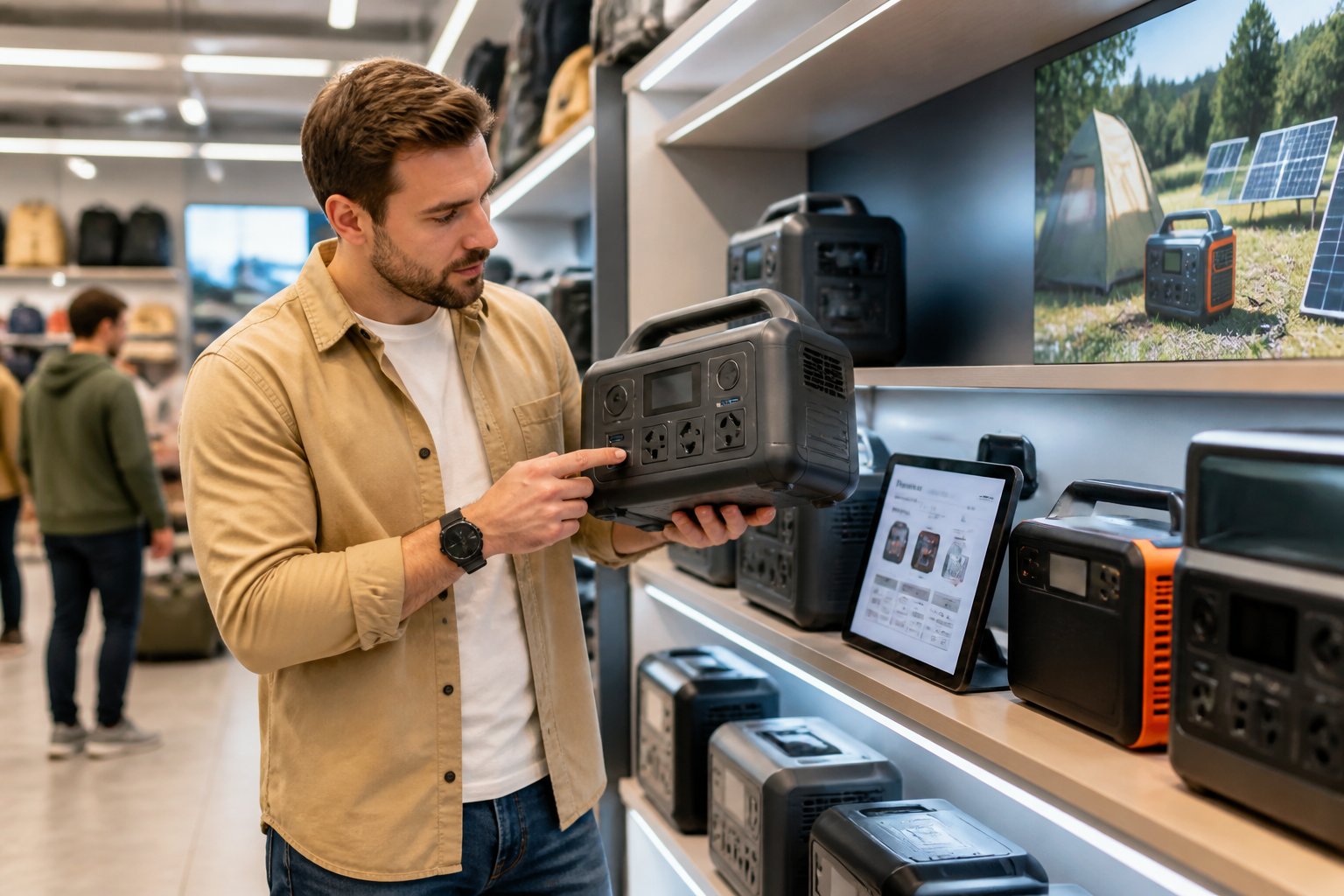
Understanding the basics makes shopping less overwhelming. This guide breaks down battery types, capacity measurements, and output ratings in plain terms. It covers everything from small units for charging devices to larger models capable of backing up home essentials.
The article ahead walks through the technical specs that matter, helps calculate how much power you actually need, and compares different models across price points. By the end, you’ll know exactly which features justify the cost and which portable power stations match your use case.
Understanding Power Station Fundamentals
Portable power stations function as rechargeable battery systems that store electrical energy and convert it to usable power through various outlets and ports. These devices combine battery technology, inverters, and charging systems into standalone units that eliminate the need for fuel or ongoing maintenance.
What Sets Portable Power Stations Apart
Portable power stations differ fundamentally from traditional generators through their quiet, emission-free operation. Unlike gas-powered generators that burn fuel to create electricity, these devices store energy in rechargeable batteries and release it on demand.
The key advantage lies in their indoor safety. A portable power station produces no carbon monoxide or exhaust fumes, making it suitable for tent use during camping trips or indoor backup power during outages. Traditional generators require outdoor placement with proper ventilation.
Most models support multiple charging methods. Users can recharge via standard wall outlets, car charging ports, solar panels, or USB-C power delivery. This flexibility makes portable power stations particularly valuable for off-grid situations where access to AC power is limited or nonexistent.
How Portable Power Stations Work
The core operation involves three stages: charging, storage, and conversion. During charging, the station accepts input power from various sources and stores it in internal battery cells. The battery management system regulates voltage and current to protect the cells from overcharging or overheating.
When devices need power, the station converts stored DC battery power into the required output format. AC outlets use an inverter to transform DC into alternating current, while USB and DC ports deliver power directly from the battery with minimal conversion.
Pure sine wave inverters ensure clean, stable power output that matches grid electricity. This technology protects sensitive electronics and appliances with motors from potential damage caused by modified sine wave outputs found in cheaper alternatives.
Key Components and Technologies
Modern portable power stations use lithium-ion or lithium iron phosphate (LFP) batteries as their energy storage foundation. LFP batteries offer superior safety characteristics, longer lifespans exceeding 3,000 charge cycles, and better performance in high-temperature environments compared to standard lithium-ion variants.
The battery management system monitors cell voltage, temperature, and current flow to prevent damage and optimize performance. This system also balances charge distribution across individual cells to maintain capacity over time.
Output options typically include AC outlets for household appliances, DC ports for car accessories, and USB ports ranging from standard 5V to 100W USB-C power delivery. The number and type of ports directly impact versatility for camping power needs and emergency backup scenarios.
Evaluating Battery Chemistry and Capacity
The battery is the core component that determines how long a portable power station runs, how many times it can be recharged, and whether it remains safe during years of use. Understanding the differences between battery chemistries and accurately assessing capacity requirements ensures buyers select a unit that matches their power needs without overpaying for unnecessary features.
Types of Battery Chemistry: LiFePO4 vs Lithium-Ion
LiFePO4 batteries (also called LFP batteries) have become the preferred choice for modern portable power stations due to their superior safety profile and longevity. These batteries resist thermal runaway, making them less prone to overheating or fire compared to standard lithium-ion batteries. The EcoFlow Delta Pro and Jackery Explorer 2000 V2 both utilize LiFePO4 chemistry.
Standard lithium-ion batteries, which include NMC (nickel manganese cobalt) variants, offer higher energy density but sacrifice cycle life and thermal stability. They pack more power into smaller spaces but typically last only 500-1,000 charge cycles before significant degradation occurs.
LiFePO4 batteries deliver 3,000-4,000 cycles or more before reaching 80% capacity, translating to a decade of regular use. The upfront cost is higher, but the per-cycle cost makes LFP batteries more economical over time. A quality battery management system (BMS) protects both chemistries from overcharging, overheating, and cell imbalances.
Assessing Battery Capacity and Energy Needs
Battery capacity, measured in watt-hours (Wh), indicates total energy storage. A 2,000 Wh power station theoretically runs a 100-watt device for 20 hours, though real-world efficiency losses reduce this by 10-15%.
Calculate daily energy requirements by listing each device, its wattage, and expected runtime. A laptop drawing 65 watts for 4 hours consumes 260 Wh. A mini-fridge using 60 watts continuously for 24 hours requires 1,440 Wh. Add these values and multiply by 1.2 to account for inverter efficiency losses.
Buyers should match capacity to their specific use case. Weekend campers running lights and phones need 300-500 Wh. Emergency backup users powering refrigerators and medical devices require 1,500-3,000 Wh. The EcoFlow Delta Pro 3 offers expandable capacity through additional battery modules.
Cycle Life, Energy Density, and Longevity
Cycle life defines how many full charge-discharge cycles a battery completes before degrading to 80% of original capacity. LiFePO4 batteries maintain performance through 3,000-4,000 cycles, while standard lithium-ion batteries fade after 500-1,000 cycles.
Energy density measures how much power fits into a given weight or volume. Lithium-ion batteries achieve 150-220 Wh/kg, making them lighter but less durable. LiFePO4 batteries range from 90-160 Wh/kg, adding weight but extending battery life significantly.
Proper battery care extends longevity regardless of chemistry. Store units at 50-60% charge in cool, dry locations. Avoid complete discharges and extreme temperatures. The battery management system handles cell balancing automatically, but users should cycle the battery every 3-6 months during long-term storage. Quality LiFePO4 units retain 80% capacity after 10 years of typical use, while cheaper lithium-ion alternatives may require replacement within 3-5 years.
Power Output, Port Selection, and Charging Methods
The right combination of power output, ports, and charging capabilities determines whether a portable power station meets your specific needs. Understanding continuous wattage limits, available connection types, and recharging options helps ensure compatibility with your devices and usage patterns.
Continuous Output, Surge Rating, and Inverter Type
Continuous output represents the sustained wattage a power station delivers over time. A 1,000-watt unit like the Anker Solix C1000 handles devices that draw up to 1,000 watts continuously. The surge rating matters for appliances with motors or compressors that need extra power during startup—often 2-3 times the continuous rating.
Pure sine wave inverters produce clean power that matches household electricity. This protector sensitive electronics like laptops, medical devices, and audio equipment from damage or malfunction. Modified sine wave inverters cost less but can cause issues with certain equipment.
Most quality stations include overload protection and short-circuit protection to prevent damage when power demands exceed capacity. The EcoFlow Delta 2 and EcoFlow Delta 2 Max both feature these safety mechanisms alongside surge ratings that accommodate high-demand appliances.
Types of Outlets and Ports
AC outlets power standard household devices and appliances. Entry-level models may include one or two outlets, while units like the Bluetti Elite 200 V2 offer four or more. Count your simultaneous power needs before selecting a model.
USB-C PD (Power Delivery) ports charge phones, tablets, and laptops faster than standard USB-A ports. Output varies from 15 watts to 140 watts—higher wattage means faster charge speed for compatible devices. Some stations include dedicated ports for different wattage outputs.
Additional port types include:
- USB-A ports for basic device charging
- 12V DC outlets (car accessory ports) for automotive accessories
- Anderson connectors for solar panel integration
- RV outlets (30-amp or 50-amp) on larger models
The Anker Solix C1000 Gen 2 demonstrates thoughtful port selection with multiple USB-C PD ports, several AC outlets, and DC options. Check that output wattage on each port type matches your device requirements.
Charging Options: AC, Solar, Vehicle, and Fast Charging
AC wall charging through a standard outlet remains the most common recharging method. Charging speed varies significantly—some stations recharge in 90 minutes while others require 8-10 hours. The Bluetti AC180 supports fast charging technology that reduces wait times.
Solar charging provides off-grid independence when paired with compatible panels. Check the maximum solar input wattage and voltage range. The EcoFlow Delta 2 accepts up to 500 watts of solar input, while budget models may limit input to 100-200 watts.
Multiple charging options add flexibility:
- Vehicle charging through 12V car outlets (slower than AC)
- Dual charging (AC + solar simultaneously)
- Pass-through charging allows device use while recharging the station
Some manufacturers offer expandable capacity through additional battery modules. The EcoFlow Delta 2 Max supports expandable battery options that increase total storage without replacing the base unit.
Practical Use Cases and Choosing the Right Size
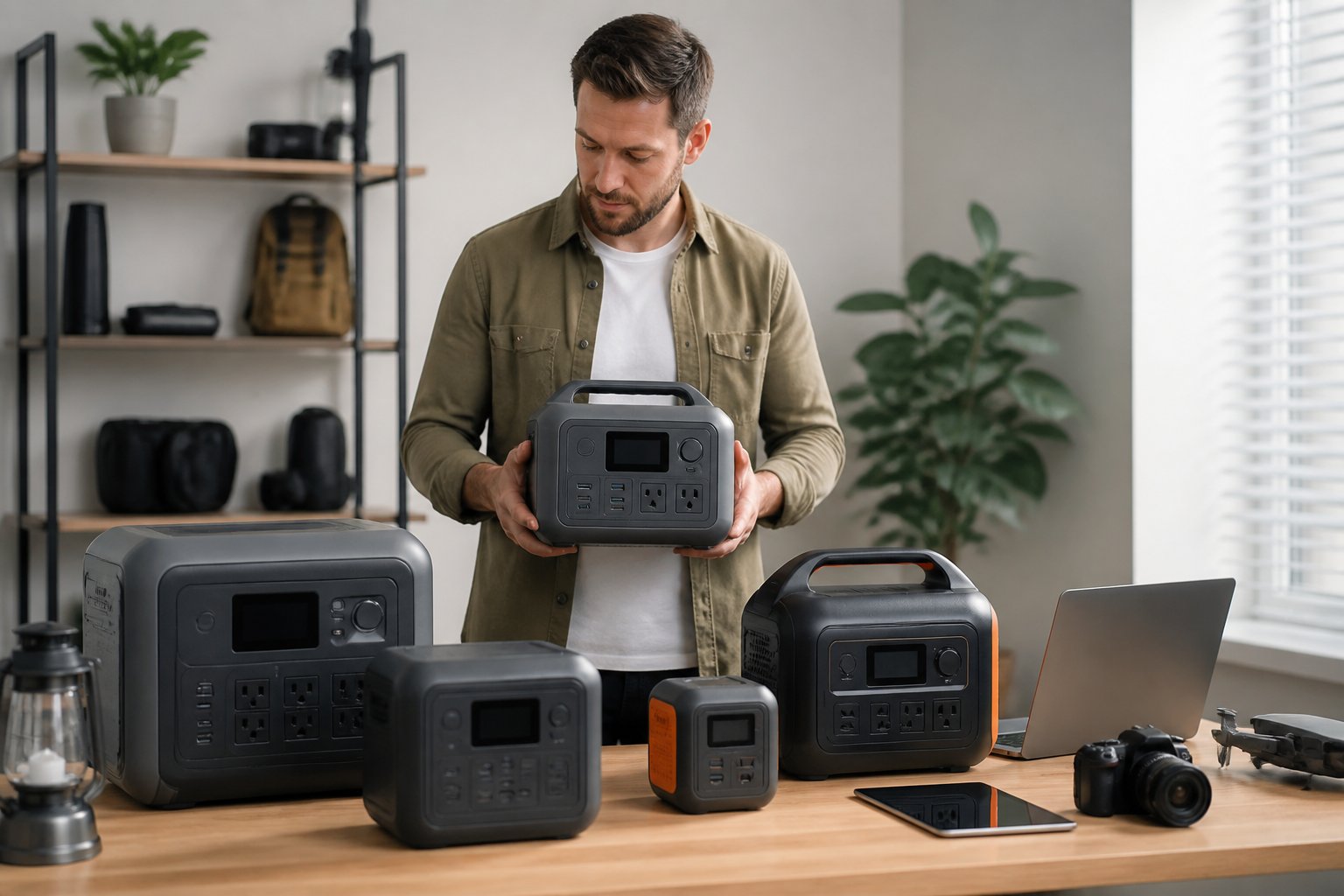
Selecting the right portable power station depends on matching its capacity and output to specific scenarios, whether that’s keeping essentials running during power outages or providing reliable energy for extended camping trips. Understanding real-world energy demands helps narrow down the wattage and watt-hour requirements for each application.
Matching Station Size to Real-World Energy Needs
The first step involves listing devices that will draw power and identifying their wattage ratings. Medical equipment like CPAP machines typically use 50 watts, smartphones require about 5 watts, and laptops draw around 80 watts. A standard refrigerator consumes approximately 400 watts during operation.
To calculate runtime, users divide the station’s watt-hour capacity by total device wattage. A 2,400 Wh unit powering 400 watts of devices provides roughly 5 hours of use after accounting for the 85% efficiency rate typical of most stations. Appliances with surge demands, such as refrigerators and air conditioners, need stations with higher peak output ratings.
A runtime calculator simplifies these estimates:
- Multiply each device’s wattage by hours of daily use
- Add 20% buffer for startup surges
- Compare total against station capacity multiplied by 0.85
Intermittent use extends runtime significantly since refrigerators cycle on for only about one-third of each hour, reducing actual consumption to roughly 80 watts per hour instead of the full 240-watt rating.
Home Backup and Power Outage Preparedness
Home backup applications prioritize essential devices during power outages. Critical loads include medical equipment, lighting, phone charging, internet modems, and refrigeration. A typical essential setup drawing 1,545 watts requires a station with at least 1,800 watts output capacity and surge capability to 3,600 watts for refrigerator startups.
For multi-day outages, a 5,000 Wh station can power a laptop (320 Wh daily), refrigerator (1,920 Wh daily), four smartphones (100 Wh daily), and lighting (190 Wh daily) for approximately two days. Well pumps add significant demand at 1,000 watts and should be calculated separately if water access is critical.
Quiet operation makes portable stations ideal for indoor use during emergencies, unlike gas generators. Units designed for home backup often include solar charging capability to extend runtime indefinitely during extended outages.
Portable Power for Camping and Outdoor Adventures
A portable power station for camping typically ranges from 500 to 2,000 Wh depending on trip duration and device requirements. Weekend campers using LED lighting, phone charging, and small fans can manage with compact power stations around 500-1,000 Wh weighing 15-30 pounds.
Camping power needs scale up for longer trips or comfort items. Running a 12-volt cooler (60 watts), charging camera batteries, powering lights, and keeping multiple devices charged requires roughly 800-1,200 Wh daily. A 2,000 Wh camping power station handles these loads for 2-3 days between recharges.
Solar panel compatibility extends off-grid capability significantly. A 200-watt solar panel can replenish 800-1,000 Wh daily in good conditions, making indefinite camping feasible with proper energy management.
Overlanding, Off-Grid Living, and Everyday Backup
Overlanding demands rugged stations with 2,000-5,000 Wh capacity to support extended vehicle-based adventures. These applications require powering 12-volt appliances, refrigeration, communication equipment, and occasional power tools. Stations in this range weigh 60-100 pounds but provide multi-day autonomy.
Off-grid power setups benefit from expandable battery systems that grow from 3,000 Wh to 10,000+ Wh through additional modules. This flexibility supports variable energy needs across seasons and allows users to start small and expand as requirements become clearer through real-world use cases.
Everyday backup applications suit smaller 1,000-2,000 Wh stations kept charged for unexpected outages or remote work sessions. These mid-range units balance portability with enough capacity to handle workstations, internet equipment, and basic appliances for 8-12 hours of typical use.
Advanced Features, Safety, and Maintenance
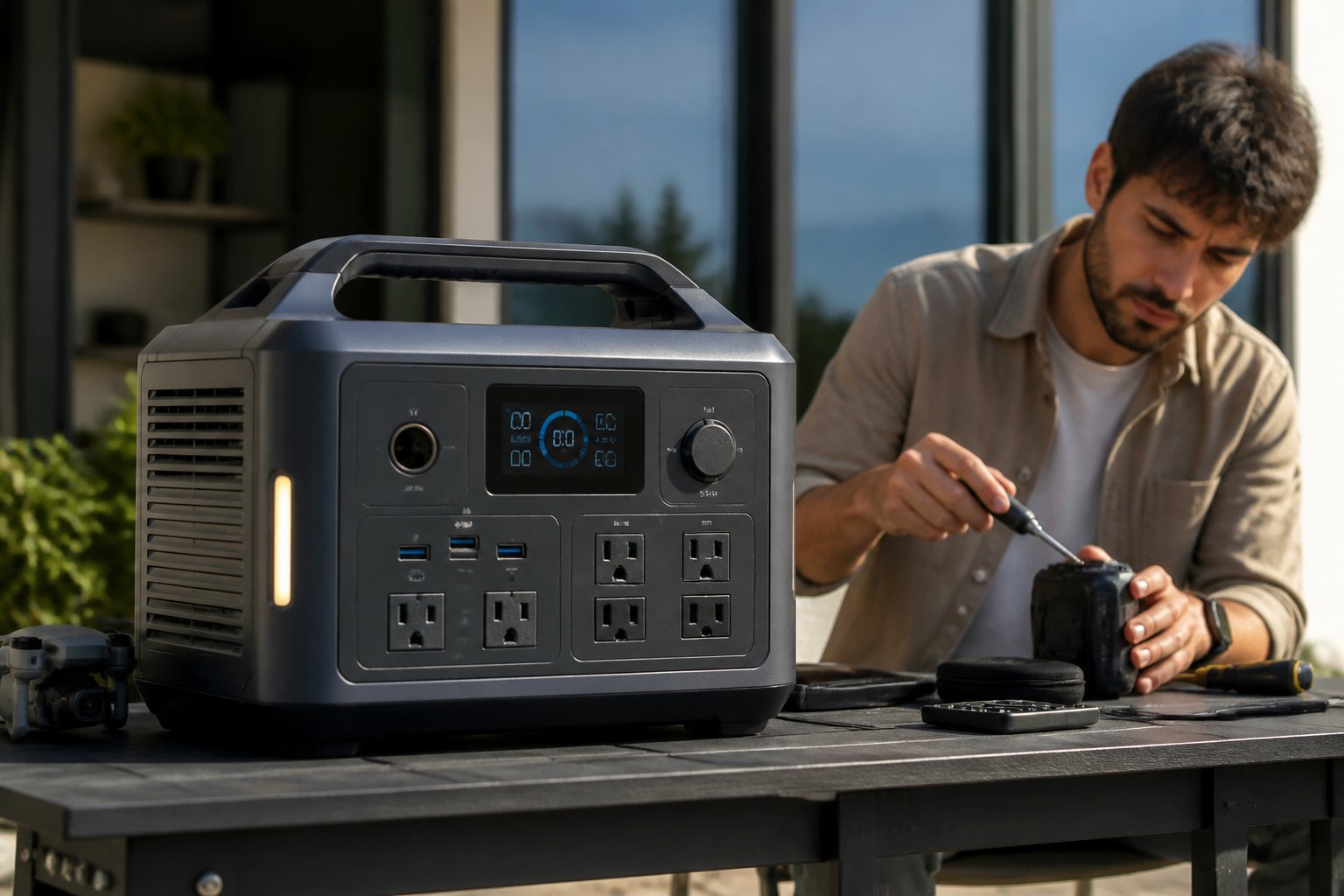
Modern power stations include built-in protections and smart technologies that prevent failures and extend battery life. Proper ventilation, quiet operation, and regular maintenance practices ensure reliable performance whether you’re camping off-grid or preparing for home emergencies.
Essential Safety Protections and Smart Features
A quality battery management system (BMS) serves as the brain of your power station, monitoring voltage, current, and temperature to prevent damage. The BMS coordinates multiple safety layers including overload protection that shuts down outputs when devices draw too much power, and short-circuit protection that instantly cuts power if wiring faults occur.
Look for stations with UL, CE, or FCC certifications that verify compliance with international safety standards. These certifications indicate the unit has passed rigorous testing for electrical safety and electromagnetic interference.
Advanced models include smart features like smartphone apps for remote monitoring, firmware updates that improve performance, and UPS (uninterruptible power supply) modes that switch to battery power within milliseconds during outages. App connectivity lets you track charge levels, adjust output settings, and receive alerts about potential issues before they become serious problems.
Temperature sensors within the BMS prevent thermal runaway by reducing charge rates or shutting down completely when internal temperatures exceed safe thresholds. This protection is particularly important for LiFePO4 and NMC batteries that can degrade rapidly under extreme heat.
Portability, Quiet Operation, and Ventilation
Weight and size directly impact portability, with smaller 500Wh stations weighing 5-7kg and larger 2kWh models reaching 20-25kg. Ergonomic handles and compact designs make transport easier, though heavier units may require two people or a cart for longer distances.
Quiet operation matters for camping and indoor use. Fanless designs operate silently but may have lower output limits, while fan-cooled models produce 40-50 decibels under load (similar to a quiet conversation). Check specifications if noise is a concern for your use case.
Proper ventilation prevents overheating and maintains efficiency. Never block air vents during operation, and keep the unit at least 15-20cm away from walls or enclosed spaces. When running high-wattage appliances, position the station in cool, well-ventilated areas to help internal cooling systems work effectively.
Care Tips to Maximize Longevity
Store your power station at 50-60% charge in a cool, dry location between 15-25°C for long-term storage. Full charges or complete depletion during extended storage accelerates battery degradation and reduces overall cycle life.
Perform a full discharge and recharge cycle every 3-4 months to calibrate the battery management system and maintain accurate capacity readings. This maintenance step helps the BMS track actual battery health and prevents premature low-battery warnings.
Keep firmware updated through manufacturer apps to fix bugs and optimize charging algorithms. Clean ports and vents regularly with compressed air to prevent dust buildup that blocks airflow. Inspect cables for fraying and check that connection points remain tight and corrosion-free.
Avoid exposing the unit to freezing temperatures below 0°C or extreme heat above 40°C, as both conditions permanently damage battery cells. If you notice swelling, unusual heat, or rapid capacity loss, discontinue use immediately and contact the manufacturer for safety evaluation.
Comparing Top Portable Power Station Models
Leading models vary significantly in capacity, charging speed, and expandability, making direct comparisons essential for finding the right match. Major brands like EcoFlow, Jackery, Bluetti, and Anker dominate the market with distinct strengths in different categories.
Popular Models and Brand Highlights
EcoFlow stands out with the Delta Pro 3 and Delta 2 series, known for exceptional fast-charging capabilities. The Delta 2 Max offers solid mid-range performance, while the original Delta 2 provides a budget-friendly entry point for casual users.
Jackery has established itself as a pioneer in the industry. The Explorer 2000 v2 represents their latest generation of high-capacity units, building on over a decade of refinement in portable power technology.
Bluetti focuses on durability and weather resistance. The AC180 serves everyday needs effectively, while the Elite 200 v2 targets users requiring more robust solutions for extended off-grid periods.
Anker entered the market with competitive offerings like the Solix C1000 and its updated Solix C1000 Gen 2. These models balance affordability with reliable performance for basic camping and emergency backup needs.
Comparing Features and Specifications
Key specifications to compare include capacity (measured in Wh), maximum output (watts), and number of ports. Most portable power stations for camping range from 600Wh to 2,000Wh.
| Feature | Entry-Level | Mid-Range | Premium |
|---|---|---|---|
| Capacity | 600-1,100Wh | 1,100-2,100Wh | 2,100Wh+ |
| AC Output | 1,000-1,500W | 1,500-2,400W | 2,400W+ |
| Charge Time | 2-4 hours | 1-2 hours | 0.5-1.5 hours |
Charging methods separate models significantly. Some accept only AC wall charging, while premium units support solar, vehicle 12V, and simultaneous charging from multiple sources.
Expandability matters for growing power needs. Certain models allow additional battery packs to multiply capacity without purchasing entirely new systems.
How to Use Comparison Charts and Guides
Start by filtering models based on minimum capacity requirements. Calculate total watt-hours needed by multiplying device wattage by hours of intended use, then add 20% buffer.
Comparison charts should be sorted by the most critical spec for the intended use case. Someone prioritizing portability sorts by weight, while those building whole-home backup systems prioritize total capacity and expansion options.
Lab-tested efficiency ratings reveal real-world performance better than manufacturer claims. Independent testing shows actual charge times and power conversion losses that impact usable capacity.
Portable power station guides typically organize models by size categories: small (600-1,100Wh), medium (1,100-2,100Wh), and large (2,100Wh+). This framework simplifies the decision process by immediately eliminating unsuitable size classes.