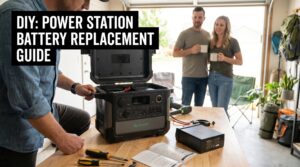
Portable power station battery replacement typically costs between $200 and $800, depending on the unit’s capacity, brand, and battery chemistry. Entry-level models with smaller lithium-ion batteries fall on the lower end, while high-capacity LiFePO4 systems from premium brands can exceed $600 for the battery alone. Professional installation adds another $100 to $300 if the model isn’t designed for user replacement.
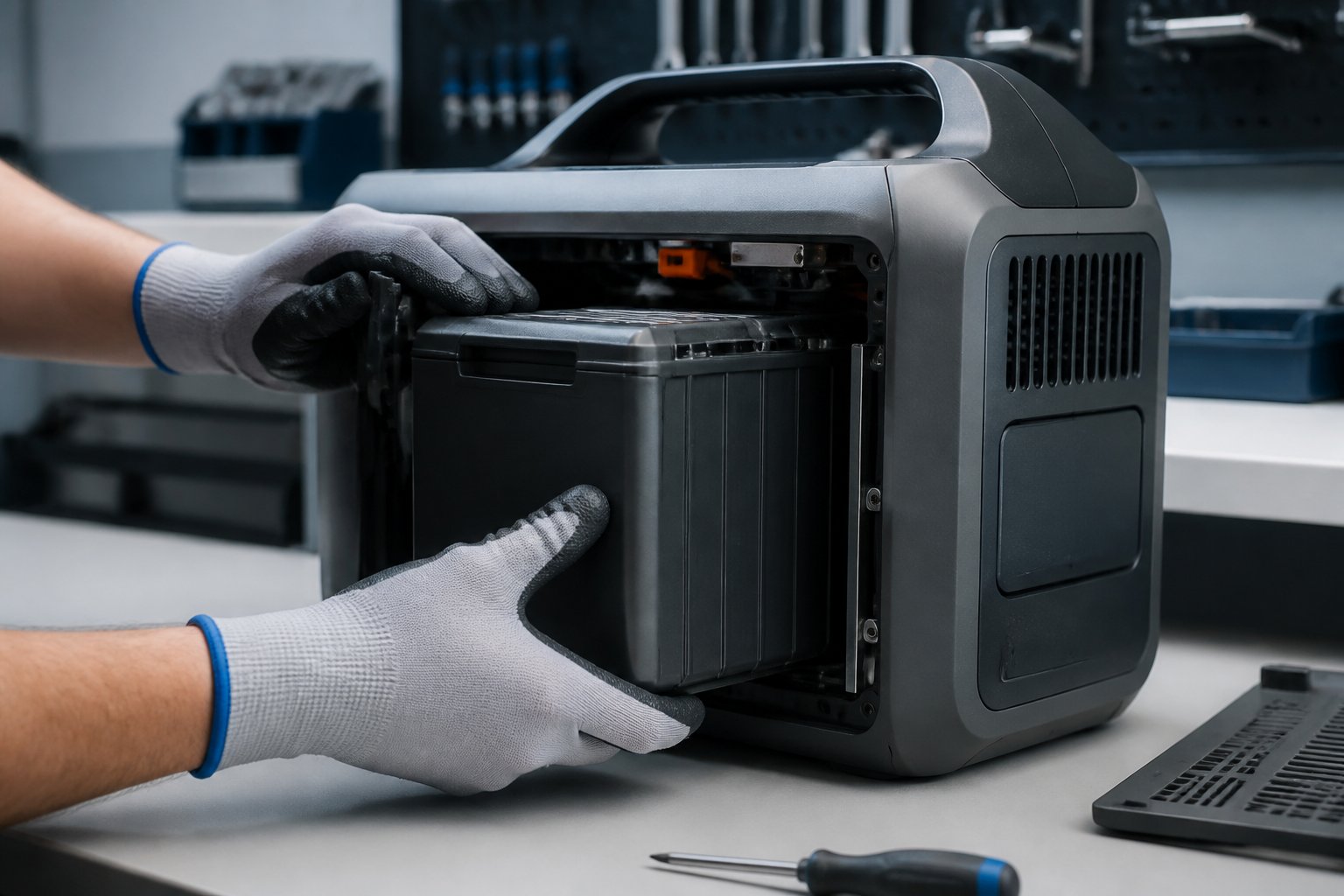
Understanding these costs upfront helps determine whether battery replacement makes financial sense compared to purchasing a new unit, especially since replacement batteries often cost 40-60% of what a brand-new power station would cost. The decision becomes more complex when factoring in the age of the device, available warranty coverage, and whether newer models offer significant performance improvements.
Battery chemistry plays a significant role in both replacement frequency and cost. LiFePO4 batteries last considerably longer than standard lithium-ion options, potentially delaying replacement for years while providing better long-term value. Beyond the battery price itself, several hidden expenses can impact the total investment, from specialized tools to potential warranty complications that affect the overall economics of extending a portable power station’s lifespan.
Key Factors Influencing Replacement Cost
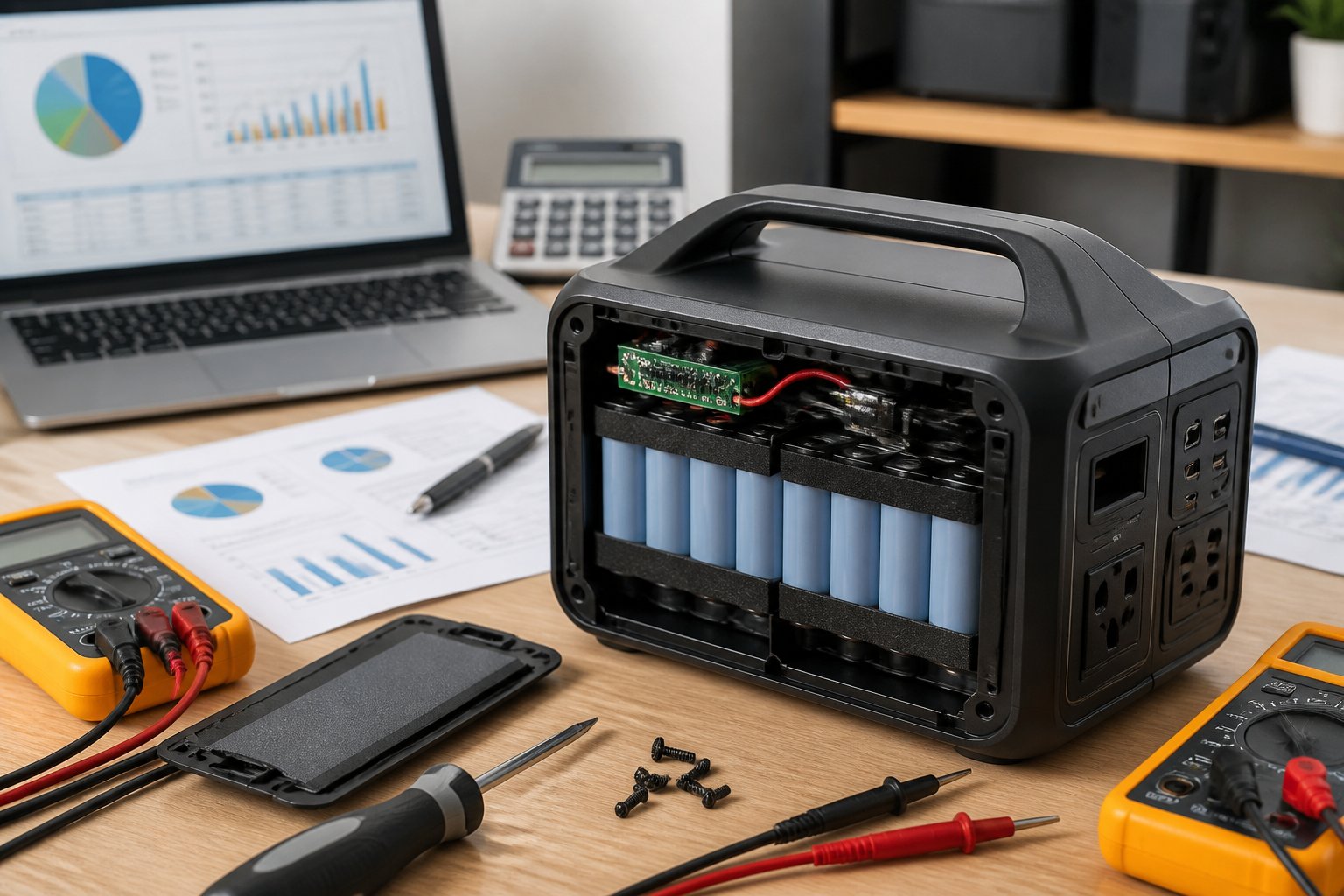
Replacement cost for portable power station batteries varies from $200 to $800 depending on several technical and commercial factors. Battery chemistry, capacity ratings, manufacturer specifications, and installation requirements all play distinct roles in determining final expenses.
Battery Chemistry and Technology
The type of battery chemistry directly impacts replacement cost due to differences in manufacturing complexity and raw material expenses. Lithium-ion batteries typically cost $150-$400 for replacement, while LiFePO4 (lithium iron phosphate) batteries range from $300-$600 for comparable capacities.
LiFePO4 batteries command higher prices because they offer 3,000-5,000 cycle life compared to standard lithium-ion’s 500-1,000 cycles. This extended lifespan makes them more economical over time despite higher upfront costs. The battery management system also varies by chemistry, with LiFePO4 requiring more sophisticated monitoring circuits to balance cells and prevent thermal issues.
Premium chemistries like solid-state variants, when available, add 30-50% to replacement costs but deliver improved safety profiles and energy density.
Capacity and Watt-Hour Ratings
Battery capacity measured in watt-hours directly correlates with replacement cost at approximately $0.15-$0.40 per watt-hour for OEM batteries. A 500Wh replacement battery costs around $200-$250, while a 2,000Wh unit runs $600-$800.
Higher capacity batteries require more cells connected in series and parallel configurations, increasing both material costs and assembly complexity. Battery specifications also influence pricing—units with higher discharge rates or temperature tolerance use premium cell grades that add 15-25% to costs.
The relationship isn’t perfectly linear because larger capacity batteries benefit from economies of scale in manufacturing. A 2,000Wh battery doesn’t cost exactly four times more than a 500Wh unit.
Brand and Model Considerations
OEM replacement batteries from manufacturers like EcoFlow, Bluetti, and Jackery typically cost 40-60% of the original unit’s purchase price. A Bluetti EB70S battery replacement runs approximately $300, representing about 40% of the new unit cost.
Brand reputation affects pricing because established manufacturers maintain strict quality control and compatibility testing. Third-party batteries may offer 30-40% savings but often lack proper battery management system integration and UL certification.
Model age matters significantly. Newer models with modular designs have readily available batteries, while discontinued models face limited supply that inflates prices. Some manufacturers offer battery replacement programs with tiered pricing based on warranty status and unit age.
Labor and Service Fees
Professional installation adds $100-$300 to replacement cost depending on the station’s design complexity. User-replaceable models like the Bluetti AC200P eliminate these fees entirely, while sealed units requiring complete disassembly necessitate professional service.
Authorized service centers charge premium rates but preserve warranty coverage and maintain proper safety protocols during battery swaps. Independent repair shops offer lower rates ($75-$150) but may void existing warranties.
Shipping costs for battery replacements add $30-$75 due to hazardous material handling requirements for lithium-based batteries. Some manufacturers include prepaid shipping labels in their replacement programs, reducing this expense. DIY replacements eliminate labor fees but require proper tools and safety equipment costing $40-$80 for first-time purchases.
Popular Power Stations and Replacement Examples
Replacement costs vary significantly across major power station brands, with OEM batteries typically ranging from 30-60% of a new unit’s price. Understanding specific pricing for popular models helps owners make informed decisions about replacement versus purchasing new equipment.
EcoFlow DELTA Pro Cost Breakdown
The EcoFlow DELTA Pro uses a modular LiFePO4 battery system that simplifies replacement. An official replacement battery costs approximately $1,200-$1,400, compared to $3,699 for a complete new unit.
This represents roughly 35% of the total unit cost. The DELTA Pro’s 3.6kWh battery is user-replaceable without professional assistance, saving $100-$300 in labor costs. EcoFlow offers extended warranties that can reduce replacement costs by 20-30% if purchased within the first year.
The battery’s 3,500+ cycle lifespan means most users won’t need replacement for 8-10 years with normal use. However, heavy daily cycling can necessitate replacement within 5-6 years.
Goal Zero Yeti Series
Goal Zero Yeti models require different approaches depending on the specific version. The Yeti 3000X uses a sealed design where official battery replacement through Goal Zero service centers costs $900-$1,100 for the internal lithium battery pack.
The complete unit retails for approximately $2,499, making replacement about 40% of the new unit price. Professional installation is mandatory for most Yeti models, adding $150-$250 to the total cost. Goal Zero offers a trade-in program that provides $200-$400 credit toward new units when turning in old batteries.
The Yeti 1500X battery replacement runs $700-$850 through authorized service centers. These service-replaceable designs prevent DIY installation, which protects warranties but increases overall expenses.
BLUETTI Models
BLUETTI AC200P replacement batteries cost $600-$800 for the 2,000Wh LiFePO4 pack, representing about 40% of the $1,599 retail price. The AC200P features accessible battery compartments that allow user replacement with basic tools.
The BLUETTI EP500 uses a different approach with its 5,100Wh capacity. Replacement costs range from $1,800-$2,200, which is approximately 45% of the $4,499 new unit price. BLUETTI provides official replacement kits with detailed instructions and necessary connectors.
Their customer support offers video tutorials for battery installation. The AC200P’s modular design makes it one of the more affordable models to maintain long-term, especially when factoring in the 3,500+ cycle rated lifespan of their LiFePO4 batteries.
Comparison: OEM vs. Third-Party Batteries
| Battery Type | Cost Savings | Warranty Coverage | Compatibility Risk | Lifespan Expectation |
|---|---|---|---|---|
| OEM | 0% (baseline) | Full manufacturer warranty | None | 3,000-5,000 cycles |
| Third-Party | 20-40% lower | Voided or limited | Moderate to high | 2,000-3,500 cycles |
OEM batteries guarantee compatibility and maintain manufacturer warranties but cost significantly more. Third-party options for popular models like the BLUETTI AC200P can save $200-$300 but risk BMS incompatibility.
Some third-party batteries lack proper voltage matching or certified safety features. For the EcoFlow DELTA Pro, using non-OEM batteries voids the warranty entirely and may trigger system errors. Goal Zero explicitly prohibits third-party batteries in Yeti models, with firmware that detects unauthorized replacements.
The safest approach uses OEM batteries for high-capacity units above 2kWh. Third-party options may work for older, simpler models but require verification of voltage specifications, BMS compatibility, and cell quality before purchase.
Battery Replacement Process and Professional vs. DIY Options
Replacing a portable power station battery involves careful disconnection procedures, proper handling of lithium cells, and reassembly that maintains electrical integrity. The decision between DIY and professional service depends on technical skill level, available tools, warranty status, and cost considerations that can range from $50 for basic DIY attempts to $300+ for professional installation.
Step-by-Step Replacement Overview
The battery replacement process begins with draining the portable power station below 25% capacity to reduce fire risk from damaged lithium-ion cells. Users should shut down the unit completely by holding the power button for five seconds before beginning any disassembly work.
Opening the battery compartment typically requires removing torx or Phillips screws from the rear panel. The specific fastener type varies by model, with T10 Torx being common on many units. Once the cover is removed, the battery connector must be carefully disconnected using non-metal tools to avoid electrical shock.
A spudger or plastic pry tool works best for walking the battery connector off its pins by alternating pressure on each side. Metal tools should never contact the battery terminals during this step. The battery cables need proper routing to prevent pinching when reinstalling the enclosure.
After disconnecting the power, users can remove any metal battery covers or retention clips holding the replaceable battery in place. The new battery installation reverses this process, ensuring correct polarity alignment and secure connector seating before reassembly.
DIY Costs and Tools
DIY battery replacement requires an initial investment in basic tools and safety equipment. A quality toolkit including Torx drivers (T10, T15), Phillips screwdrivers, plastic spudgers, and tweezers costs $25-$45.
Safety equipment adds another layer of expense but provides essential protection. An anti-static wrist strap prevents static discharge damage to sensitive electronics and costs $8-$15. Insulated gloves protect against electrical shock and run $12-$20 per pair. Safety glasses guard against battery puncture risks and cost $10-$18.
The replacement battery itself represents the largest expense in DIY projects. A LiFePO4 battery with comparable capacity to the original typically costs $200-$600 depending on watt-hour rating. Lower-quality lithium-ion alternatives may be available for $150-$400 but often lack the lifespan of lithium iron phosphate chemistry.
First-time DIY attempts may also require purchasing a work mat, storage containers for screws, and possibly a multimeter for testing connections. These supplementary items add $30-$60 to the total project cost.
Professional Installation Fees
Professional battery replacement services charge $100-$200 in labor fees on top of the battery cost itself. This pricing assumes the user provides a compatible replacement battery, with some technicians requiring OEM parts only.
Manufacturer-authorized service centers offer official battery replacement programs where users ship their portable power station for refurbishment. EcoFlow and Bluetti provide these services with turnaround times of 2-4 weeks and total costs ranging from $350-$800 depending on capacity.
Mobile repair services that come to the customer’s location charge premium rates of $150-$250 for labor. These services prove valuable for users with multiple units or heavy power stations that are difficult to transport.
Some electronics repair shops handle portable power station battery replacement as a side service. Their rates typically fall between $75-$150 for labor, though they may lack specific experience with power station models and could void existing warranties.
Warranty and Support Implications
Most portable power station manufacturers void the warranty if users perform unauthorized battery replacement. Standard warranties cover 2-3 years from purchase, meaning DIY replacement only makes financial sense for units beyond this coverage period.
Some brands like EcoFlow specifically design certain models with user-accessible battery compartments and provide official replacement procedures. These exceptions maintain warranty coverage when users follow documented steps and use approved replacement batteries.
Opening a sealed battery compartment on warranty-covered units eliminates eligibility for future manufacturer support. This includes battery defects, charging issues, inverter failures, and other component problems that would otherwise receive free repair or replacement.
Professional installation through authorized service centers preserves warranty coverage on non-battery components. The service center provides documentation of the replacement work and may extend limited warranty coverage on the new battery itself for 6-12 months.
Third-party repair shops rarely offer warranty protection on their work with portable power stations. Users accepting professional installation from unauthorized technicians still forfeit manufacturer warranty coverage while gaining minimal guarantee on the replacement service.
Upgrades, Trade-Ins, and Long-Term Value
Battery replacement costs can be offset through strategic upgrades to higher-capacity cells, manufacturer trade-in programs that provide credit toward new units, and proper maintenance practices that delay degradation. These approaches transform battery replacement from a simple swap into an opportunity for improved performance or financial recovery.
Using Higher Capacity Batteries
Upgrading to a higher capacity battery during replacement can extend runtime without purchasing an entirely new unit. Many portable power stations support battery upgrades within the same voltage class, allowing users to install cells with 20-40% more watt-hours than the original configuration.
For example, a Bluetti AC200P originally equipped with 2,000Wh can often accommodate 2,400Wh replacement batteries if the Battery Management System supports the increased cell count. This upgrade typically costs $100-200 more than standard replacement but provides significantly longer off-grid operation.
Compatibility considerations include:
- Voltage matching (12V, 24V, or 48V systems must align exactly)
- Physical dimensions of the battery compartment
- BMS current limits and charge controller capacity
- Thermal management capabilities for heat dissipation
Users should verify with manufacturers before attempting capacity upgrades, as exceeding BMS specifications can trigger safety shutdowns or cause thermal runaway in extreme cases. LiFePO4 batteries offer the safest upgrade path due to their thermal stability compared to standard lithium-ion cells.
Trade-In and Recycling Programs
Major manufacturers now offer trade-in programs that recover 15-30% of a new unit’s cost when exchanging old power stations. Jackery’s program provides gift cards based on model age and condition, while BLUETTI’s trade-in initiative offers direct discounts on upgraded models for customers in the United States and Europe.
These programs address both financial and environmental impact concerns. Instead of paying $300-800 for battery replacement, users can apply trade-in credit toward newer models with improved battery chemistry, such as emerging solid-state batteries expected to reach consumer markets by 2027-2028.
Key program benefits:
- Proper recycling of hazardous battery materials prevents environmental contamination
- Trade-in evaluations account for battery swelling and other degradation indicators
- Newer units often include warranty coverage that aging stations lack
- Upgraded features like faster charging and improved inverter efficiency
EcoFlow offers prepaid shipping labels for battery recycling even without trade-in purchases. This service ensures responsible disposal of lithium-ion cells that should never enter standard waste streams.
Extending Battery Life to Reduce Costs
Preventive maintenance significantly delays the need for costly replacements. Proper charging habits can extend LiFePO4 battery life from 3,000 to over 4,000 cycles, while lithium-ion batteries benefit from avoiding full discharge cycles.
Temperature management proves critical for longevity. Operating batteries between 15-25°C prevents accelerated degradation, while charging below 0°C can cause permanent damage. Storage at 50-60% charge during inactive periods minimizes capacity loss.
Cost-saving maintenance practices:
- Monthly balancing cycles help BMS accurately track cell health
- Avoiding sustained high-current draws reduces thermal stress
- Cleaning terminals prevents resistance buildup
- Monitoring for early signs of battery swelling enables intervention before failure
Users who implement these strategies often achieve 5-7 years of service before replacement becomes necessary, reducing the effective annual cost of battery ownership by 40-60% compared to neglected units requiring early replacement.
Hidden Costs and Technical Considerations
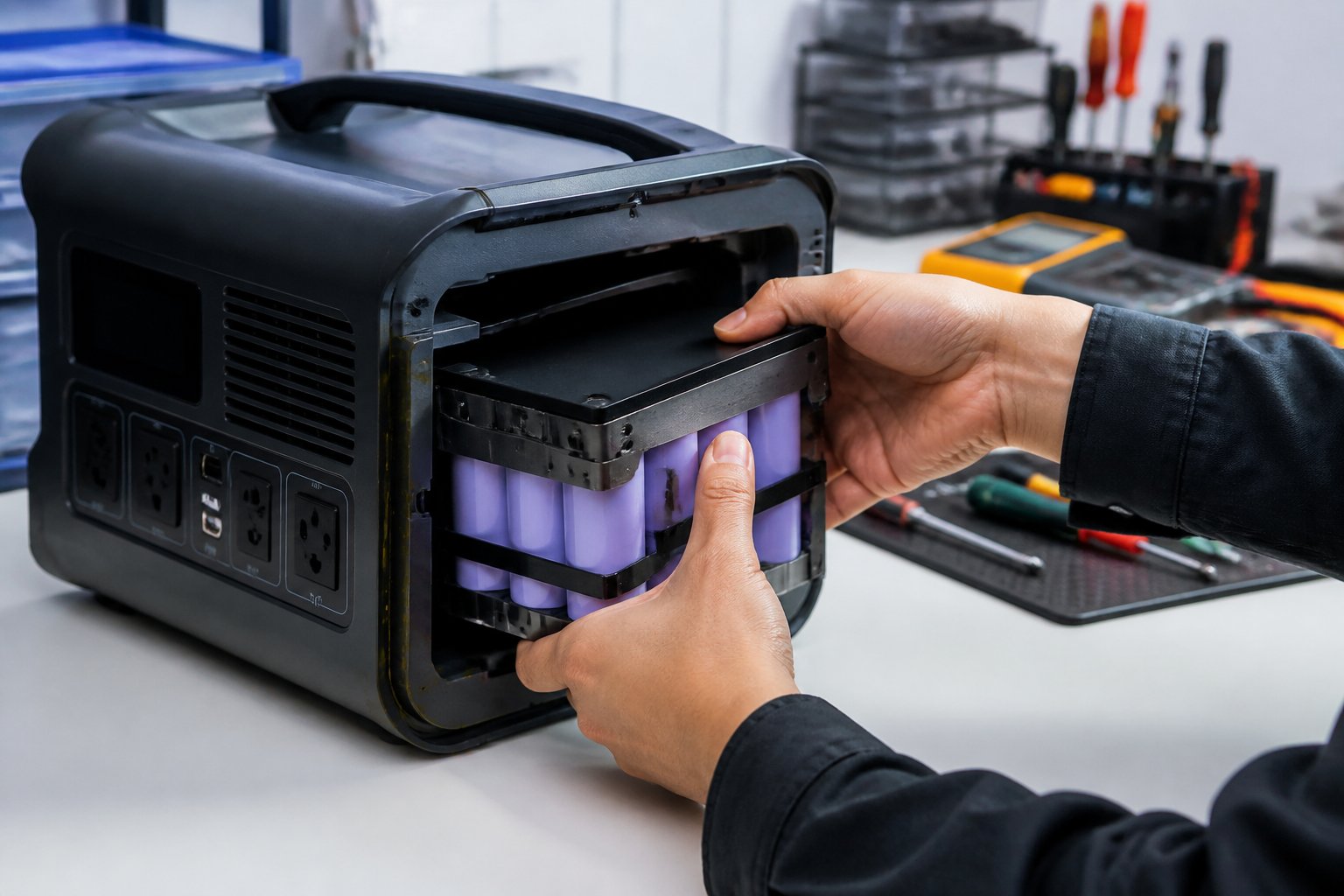
Battery replacement costs extend beyond the purchase price when factoring in technical requirements like battery management system compatibility, solar charging infrastructure modifications, and thermal safety equipment that often add $150-$500 to total project expenses.
Battery Management and Compatibility
The battery management system in your power station must communicate properly with replacement batteries to prevent dangerous malfunctions. Mismatched BMS configurations can cause overcharging, undercharging, or complete system failure even when physical connectors fit correctly.
Internal resistance measurements become critical during replacement decisions. New batteries typically show resistance below 100mΩ for LiFePO4 chemistry, while worn batteries exceed 150mΩ. Testing equipment for capacity verification ranges from basic multimeters ($30-$80) to professional battery analyzers ($200-$600). These tools aren’t optional for users attempting replacements on non-user-serviceable models.
Compatibility issues frequently emerge when mixing battery generations. A station originally designed for 12V lithium-ion may require BMS firmware updates to accept newer 12V LiFePO4 cells, potentially adding $50-$150 in professional calibration fees. Some manufacturers lock their BMS to reject third-party batteries entirely, forcing purchases of proprietary replacements at premium prices.
Charging Methods and Solar Input
Replacing batteries often necessitates reconfiguring solar charging systems to match new battery chemistry specifications. MPPT charge controllers require voltage parameter adjustments when switching from lithium-ion to LiFePO4 batteries. Absorption voltage settings typically need changes from 14.4V to 14.6V for LiFePO4, while float voltage drops from 13.6V to 13.8V.
Solar panel compatibility extends beyond simple wattage matching. New batteries with higher charge acceptance rates may underutilize existing solar arrays, while oversized panels can overwhelm budget charge controllers lacking proper regulation. Upgrading from PWM to MPPT controllers costs $80-$300 but improves charging efficiency by 20-30%.
Solar input cables and connectors degrade over time. Users replacing 3-4 year old batteries should inspect MC4 connectors for corrosion and replace degraded cables ($15-$40 per cable). This prevents voltage drops that reduce charging effectiveness by 10-15%.
Thermal Management and Safety
Battery replacement creates thermal management challenges that impact safety and longevity. New batteries generate different heat patterns than degraded cells, potentially overwhelming existing cooling systems in sealed enclosures.
Thermal imaging cameras ($200-$400 for consumer models) identify hot spots indicating poor cell connections or failing thermal protection circuits. Professional installations include thermal paste application on cell contact points, adding $20-$50 in materials. Temperature sensors must calibrate to new battery thermal characteristics, requiring BMS recalibration.
Environmental controls become more critical post-replacement. Operating temperatures outside 15-25°C reduce new battery lifespan by 30-50%. Users in extreme climates may need insulation upgrades ($40-$100) or active cooling modifications ($150-$300). Safety equipment including fire-resistant battery bags ($25-$75) and thermal cutoff switches ($30-$60) protects against thermal runaway risks during the initial break-in period.