
When the power goes out or you’re miles from the nearest outlet, understanding the difference between a portable power station and a solar generator becomes critical for choosing the right backup power solution. Many people assume these are completely different devices, but the reality is simpler than marketing terms suggest. A solar generator is essentially a portable power station bundled with solar panels—the power station stores energy while the solar panels generate it from sunlight. The confusion between these terms has led many to overpay for features they don’t need or choose solutions that don’t match their actual requirements.
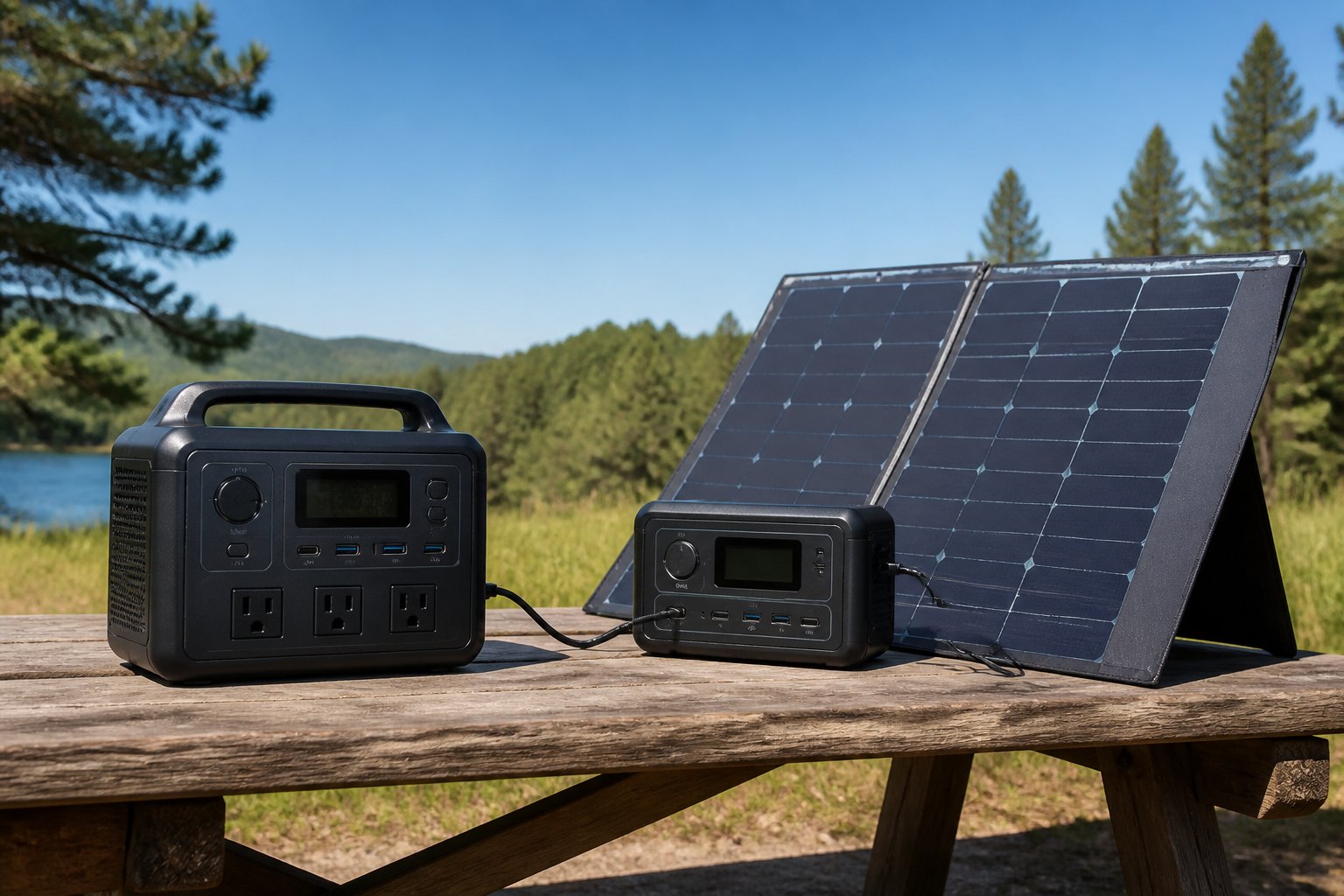
The choice between a standalone portable power station and a complete solar generator setup depends on how you plan to recharge your device and where you’ll use it. Portable power stations offer flexibility by charging from wall outlets, car chargers, or separately purchased solar panels, making them ideal for emergency backup power and short trips. Solar generators provide the same storage capacity but include integrated solar panels, creating a self-sufficient system perfect for off-grid living, extended camping, and situations where renewable energy generation matters more than initial cost.
This comparison examines the core technology, real-world performance differences, and practical considerations that determine which solution works best for specific needs. Whether you’re preparing for emergencies, planning outdoor adventures, or exploring off-grid power options, understanding these distinctions helps you invest in the right portable power solution without wasting money on unnecessary features or choosing a system that won’t deliver when you need it most.
Core Differences Explained
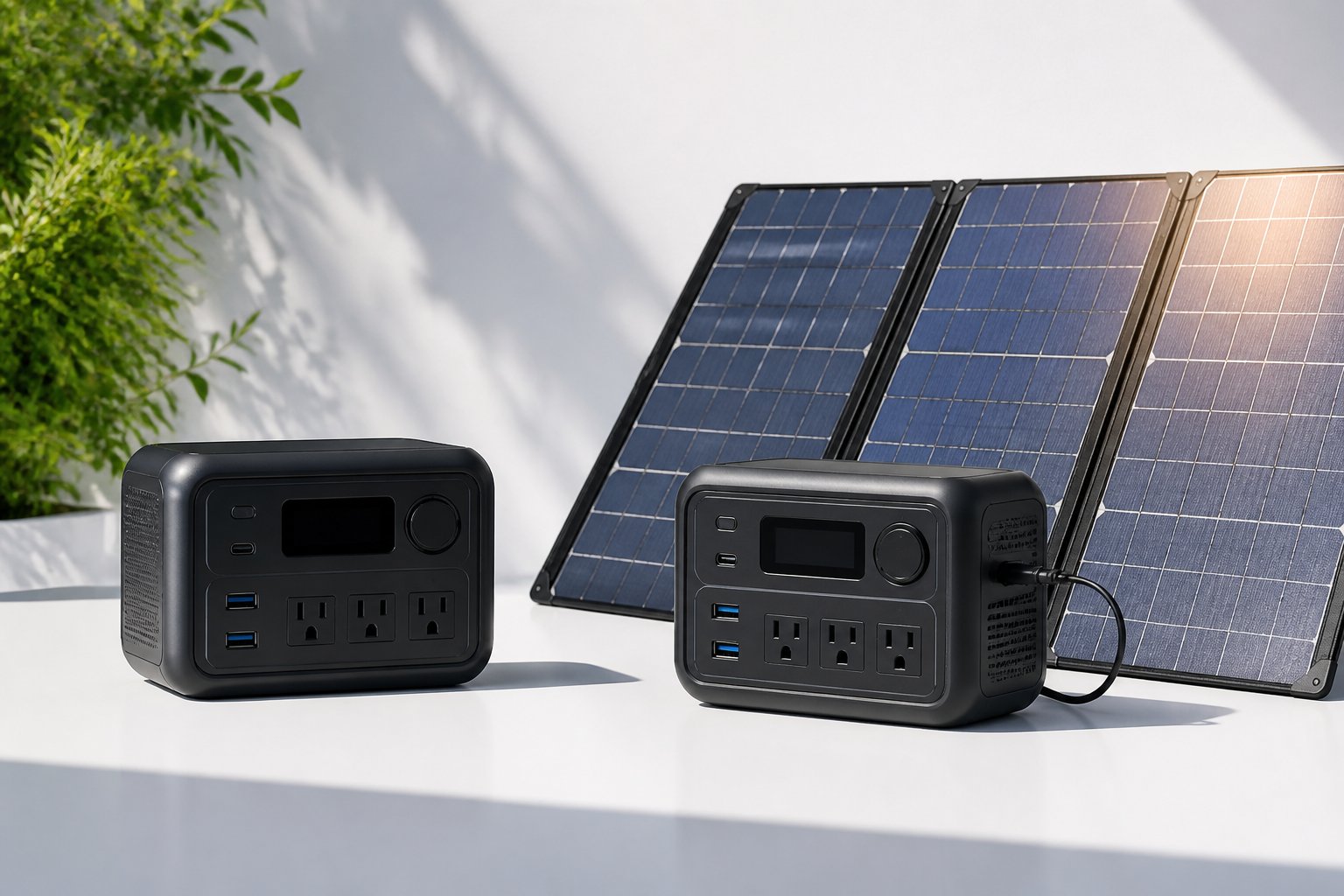
A portable power station is a rechargeable battery with outlets, while a solar generator is that same battery unit bundled with solar panels. The distinction affects charging options, portability, and whether the device can recharge itself off-grid.
What Is a Portable Power Station?
A portable power station functions as a large rechargeable battery housed in a portable case with multiple output ports. The unit contains a lithium battery (typically LiFePO4 or lithium-ion), an inverter to convert DC power to AC, and a charge controller to manage incoming power.
Most portable power stations range from 200Wh to 3,000Wh+ capacity. They include various outputs: AC outlets, USB-A and USB-C ports, DC outlets, and sometimes 12V car sockets. The key limitation is that these devices require an external power source to recharge—they store energy but don’t generate it.
Users can charge portable power stations through wall outlets (typically 2-4 hours), 12V car adapters (8-12 hours), or optional solar panels purchased separately. Without access to one of these charging methods, the battery will eventually deplete and remain unusable until recharged.
What Is a Solar Generator?
A solar generator combines a portable power station with one or more solar panels as a complete package. Despite the name, these devices don’t actually generate power through combustion like traditional generators—the term is purely marketing.
The solar generator bundle typically includes the battery unit, foldable solar panels, connection cables, and sometimes a carrying case. Panel wattages commonly range from 100W to 400W, with some bundles including multiple panels for faster charging.
The critical advantage is energy independence. As long as sunlight is available, the device can recharge itself without requiring grid access or fuel. This makes solar generators particularly valuable for extended camping trips, emergency preparedness, off-grid cabins, and RV living where traditional power sources aren’t consistently available.
How Portable Power Stations and Solar Generators Work
Both devices use identical internal technology—the difference lies entirely in charging capability. A portable power station stores electricity in its battery for later use through connected devices. It must be pre-charged before use and recharged when depleted using external power sources.
A solar generator works the same way internally but includes portable solar panels that convert sunlight into electricity. The panels connect to the power station’s solar input port, typically using MC4 connectors. The charge controller regulates incoming solar power to safely charge the battery without damage.
Charging speed varies significantly by method. Wall AC charging delivers the fastest results at 2-4 hours for most units. Portable solar panels require 5-8 hours in optimal sunlight conditions, though cloudy weather reduces output to 10-25% capacity. Car charging remains the slowest option at 8-14 hours for full capacity.
Portable Power Station vs Solar Generator: Setup and Bundles
The setup difference is straightforward. A portable power station arrives ready to use after an initial charge—simply plug devices into the available ports. Adding solar capability later requires purchasing compatible portable solar panels separately and connecting them to the unit’s solar input.
Solar generator bundles provide everything needed for solar charging in one package. The panels fold for transport and unfold for deployment. Users position panels toward sunlight, connect them to the power station via included cables, and the device begins charging automatically.
A portable power station bundle without solar panels typically costs 30-50% less than an equivalent solar generator bundle. For example, a 1,000Wh power station might retail for $800-1,000, while the same unit with a 200W solar panel bundle costs $1,200-1,500. Buying the solar generator bundle usually saves 10-15% compared to purchasing the power station and panels separately.
Key Components and Technology
The technical components inside portable power stations and solar generators determine their performance, longevity, and suitability for different applications. Battery chemistry, inverter quality, charge controllers, and solar input capabilities all affect how these devices function in real-world conditions.
Battery Chemistry and Storage Options
Battery capacity measured in watt-hours (Wh) determines how much energy storage a unit provides. A 1000Wh unit stores enough power to run a 100-watt device for 10 hours, though real-world performance is typically 20-30% lower due to conversion losses.
LiFePO4 batteries (also called LFP batteries) have become the preferred choice for quality power stations. These batteries offer 2000-3500 charge cycles compared to 500-800 cycles from standard lithium-ion batteries. LiFePO4 batteries also perform better in extreme temperatures and pose lower fire risks.
Standard lithium-ion batteries cost less initially but require replacement sooner. A unit with LiFePO4 batteries might cost $200-300 more upfront but can last 3-4 times longer. Battery chemistry directly impacts both the lifespan and safety of the device, making it one of the most critical specifications to evaluate.
Inverter and Output Power
The inverter converts DC battery power into AC power that household devices require. Pure sine wave inverters produce clean electricity identical to grid power, making them safe for sensitive electronics like laptops, medical equipment, and modern appliances.
Output power ratings include continuous watts and surge watts. A unit rated for 1000W continuous can handle devices up to 1000 watts indefinitely, while surge ratings (typically 2000W) allow brief power spikes when motors or compressors start. Modified sine wave inverters cost less but can damage or malfunction with certain devices.
Inverter efficiency typically ranges from 85-95%. A 90% efficient inverter delivering 1000Wh of AC power requires approximately 1111Wh from the battery. Higher efficiency means more usable power and longer runtimes from the same battery capacity.
Charge Controllers and Charging Methods
Charge controllers regulate power flowing into the battery to prevent overcharging and optimize charging speed. MPPT (Maximum Power Point Tracking) controllers extract 20-30% more power from solar panels compared to basic PWM controllers, particularly in cloudy conditions or when panels aren’t positioned optimally.
AC charging from wall outlets typically provides the fastest recharge times, with many units offering 500-1000W input speeds that can fully charge a 1000Wh battery in 1-2 hours. Car charging through 12V outlets is slower, usually taking 6-10 hours for the same capacity.
Charging speed affects usability during power outages or extended trips. Units accepting higher input wattage recharge faster but may cost more. Some devices support simultaneous charging from multiple sources—wall power and solar panels together—to maximize charging speed.
Solar Input and MC4 Connectors
Solar input capability determines how quickly a unit can recharge from solar panels. Most power stations accept 100-400W of solar input, though larger models handle 600-1000W or more. Higher solar input ratings enable faster charging when adequate sunlight is available.
MC4 connectors are the industry-standard waterproof connectors used to attach solar panels to power stations. These twist-lock connectors ensure secure, weatherproof connections between foldable solar panels and the charging port. Most quality units include MC4 connector compatibility, though some budget models use proprietary connections that limit solar panel options.
Solar charging efficiency depends on panel quality, weather conditions, and positioning. A 200W solar panel rarely delivers full 200W output—expect 120-160W in typical conditions. This means advertised solar charging times often take 50-100% longer than manufacturer claims suggest.
Comparing Use Cases and Performance
Real-world performance varies dramatically between portable power stations and solar generators depending on the specific application. Home emergencies demand immediate reliability regardless of weather, while extended off-grid situations benefit from renewable charging capabilities that eliminate dependency on external power sources.
Home Backup and Emergency Preparedness
Portable power stations excel as backup power solutions during home emergencies because they provide guaranteed capacity independent of weather conditions. When storms knock out power or natural disasters disrupt the grid, a pre-charged 1000Wh unit can run CPAP machines for 2-3 nights, power LED lights for days, and keep phones charged for critical communication. These units work safely indoors without emissions or noise.
Solar generators face significant limitations during emergencies. Power outages often coincide with severe weather that blocks sunlight, reducing solar charging by 50-70%. A unit that could theoretically recharge in 4 hours might take 10-12 hours during cloudy conditions, or fail to charge adequately during multi-day storms.
The optimal emergency setup combines a portable power station with separately purchased solar panels. This allows wall charging before outages while maintaining solar charging capability if grid power remains unavailable for extended periods.
Camping, Outdoor, and Off-Grid Living
Weekend campers typically find portable power stations more practical for short trips. Charging the unit before departure provides 2-3 days of power for phones, lights, cameras, and small fans without setup complexity. The compact design and lighter weight make transportation easier in vehicles or to campsites.
Extended off-grid camping changes the equation entirely. Solar generators become essential for trips lasting more than a week, providing continuous power through daily solar charging. Desert campers with clear skies report running small refrigerators, charging multiple devices, and powering fans indefinitely with 2000Wh solar generator setups.
Off-grid living scenarios like RV life or van dwelling strongly favor solar-powered generators despite higher initial costs. Full-time users report their systems paid for themselves within 6-12 months through eliminated campground electricity fees. However, forest campers or those in heavily shaded areas may struggle with insufficient solar charging and should consider larger battery capacity or hybrid systems.
Extended Off-Grid Use and Reliability
Extended off-grid use reveals the fundamental limitation of portable power stations—finite capacity without external charging. A standalone unit provides predictable power for its rated capacity but becomes useless once depleted unless grid power or vehicle charging becomes available. This makes them suitable only for situations with regular access to charging infrastructure.
Solar generators offer theoretically unlimited power for off-grid power needs but with significant weather dependency. Real users report that panels lose efficiency above 85°F and cloudy days can reduce charging to 10-20% of capacity during winter. Proper positioning requires regular adjustment as the sun moves, adding complexity to daily routines.
Battery chemistry affects long-term reliability substantially. LiFePO4 batteries provide 2000+ charge cycles compared to 500-800 cycles for standard lithium-ion, making them critical for extended off-grid living where daily charging cycles add up quickly.
Gas Generators vs Solar and Battery Solutions
Traditional gas generators deliver higher sustained power output than most portable power solutions, making them suitable for running air conditioners, power tools, or multiple high-draw appliances simultaneously. A 2000-watt gas generator costs $400-800 initially compared to $500-5000 for equivalent solar or battery systems.
However, operating costs shift the long-term calculation. Gas generators require fuel at $3-5 per gallon, oil changes, and regular maintenance. Users report spending $800+ annually on fuel alone for regular use. Solar generators have minimal ongoing costs after the initial investment, though battery replacement becomes necessary after 5-10 years depending on usage patterns.
Noise and emissions represent critical factors. Gas generators produce 60-80 decibels and cannot operate safely indoors, while portable power stations and solar generators run silently with zero emissions. Camping users increasingly prefer quiet battery solutions to avoid disturbing other campers and wildlife. For emergency home backup, the ability to operate power stations indoors safely provides life-saving advantages when weather makes outdoor generator use dangerous or impossible.
Brands, Models, and Top Portable Power Solutions
Several manufacturers dominate the portable power market, each offering distinct advantages in capacity, charging speed, and build quality. Comparing specific models and bundle configurations helps identify the most practical solutions for different power needs.
Featured Brands: EcoFlow, Jackery, Bluetti, and Goal Zero
EcoFlow stands out for rapid charging technology and expandable capacity options. The EcoFlow RIVER 2 provides 256Wh in a 7.7-pound package, suitable for basic electronics and short camping trips. The EcoFlow Delta 2 delivers 1024Wh capacity with 1800W output, handling refrigerators and power tools. The EcoFlow Delta 2 Max extends this to 2016Wh with the ability to expand up to 6kWh through additional batteries.
Jackery focuses on user-friendly designs with reliable performance. The Jackery Explorer 1000 v2 offers 1070Wh capacity with improved solar charging efficiency compared to earlier versions.
Bluetti emphasizes value and durability. The Bluetti AC180 provides 1152Wh capacity with 1800W output at a competitive price point, featuring LiFePO4 battery chemistry for extended lifespan.
Goal Zero pioneered the portable solar generator category and maintains a reputation for rugged construction suited to outdoor adventures and emergency preparedness.
Notable Model Comparisons
| Model | Capacity | Output | Weight | Charging Time |
|---|---|---|---|---|
| EcoFlow RIVER 2 | 256Wh | 600W | 7.7 lbs | 1 hour (AC) |
| EcoFlow Delta 2 | 1024Wh | 1800W | 27 lbs | 1.3 hours (AC) |
| Jackery Explorer 1000 v2 | 1070Wh | 1500W | 23.8 lbs | 1.7 hours (AC) |
| Bluetti AC180 | 1152Wh | 1800W | 35.3 lbs | 1.5 hours (AC) |
The EcoFlow Delta 2 charges faster than competitors in its class. The Jackery Explorer 1000 v2 weighs less than the Bluetti AC180 while offering similar capacity. Budget-conscious buyers often prefer the Bluetti AC180 for its balance of features and cost.
Bundled Options and Top Picks
A portable power station bundle or solar generator bundle packages the battery unit with solar panels, eliminating compatibility concerns. EcoFlow offers the Delta 2 with 220W bifacial panels. Jackery pairs the Explorer 1000 v2 with 100W or 200W panels depending on the bundle.
These bundles cost 15-25% less than purchasing components separately. The best solar generator bundle depends on intended use—lightweight combinations suit backpacking, while higher-capacity bundles serve home backup needs. Pre-matched systems ensure optimal charging rates without oversizing or undersizing panel wattage for the battery capacity.
Pros, Cons, and Decision Criteria
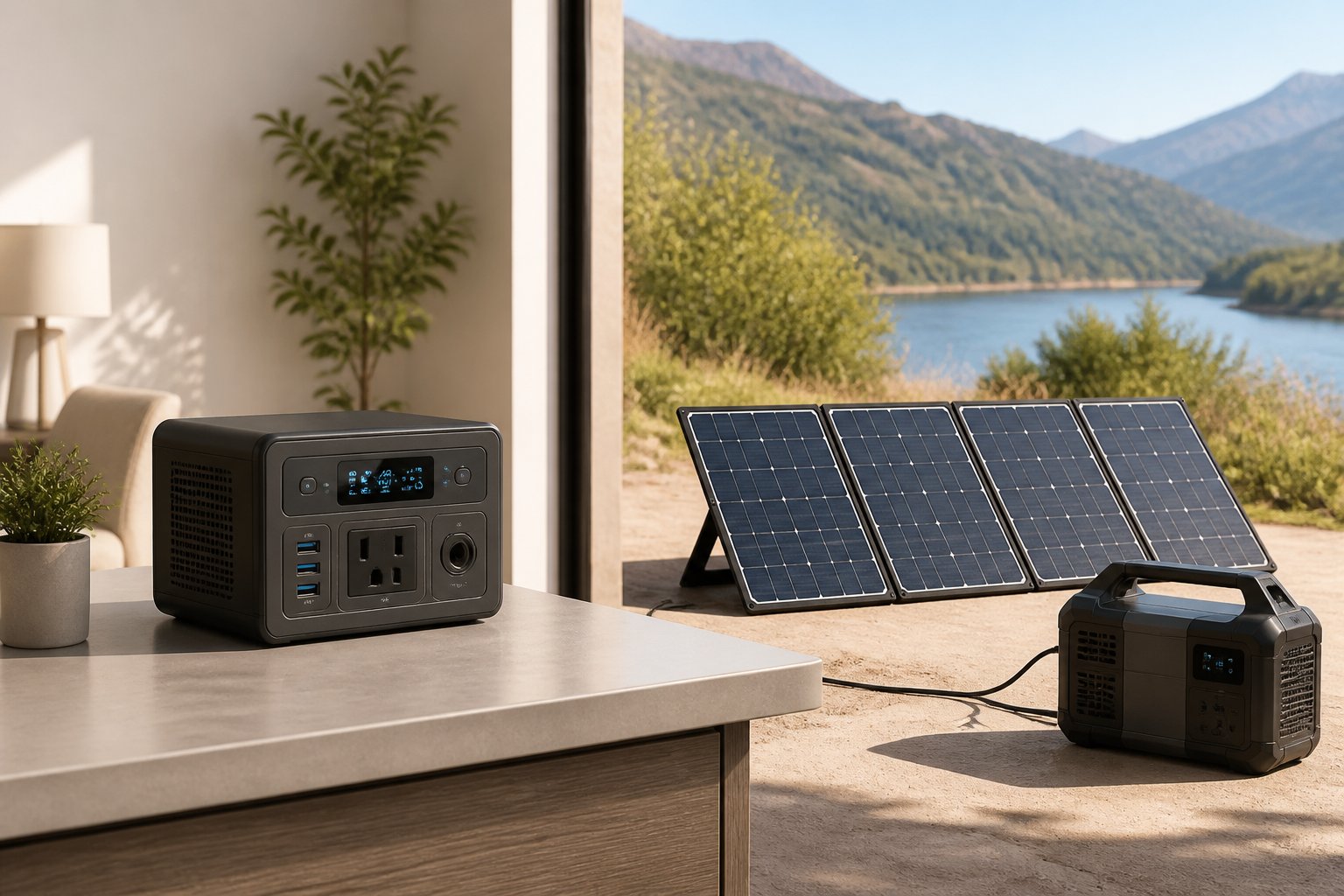
Each power solution offers distinct advantages and limitations that directly impact their suitability for specific situations. Understanding these trade-offs alongside your budget and usage patterns helps identify the right choice for your needs.
Advantages and Limitations of Each Option
Portable power stations excel in versatility and convenience. They charge quickly from wall outlets, typically reaching full capacity in 4-6 hours compared to 8-12 hours for solar charging. This makes them ideal for emergency backup situations where reliability matters more than self-sufficiency. They operate silently without emissions, allowing safe indoor use during power outages or in tents and vehicles.
The primary limitation is their dependence on external power sources for recharging. Without access to electricity or a portable solar panel, a power station becomes a depleting resource. Battery degradation over time also reduces capacity, with most lithium-ion batteries maintaining 80% capacity after 500-800 charge cycles.
Solar generators provide genuine energy independence through renewable energy generation. The integrated solar charging capability means unlimited power availability in suitable weather conditions. Users in sunny climates report running devices indefinitely without external power sources. Long-term costs favor solar generators since sunlight is free, eliminating ongoing fuel or electricity expenses.
Weather dependency represents the biggest drawback. Cloudy conditions reduce charging efficiency by 50-70%, while heavy shade or winter months can make solar charging impractical. The added weight and bulk of portable solar panels complicate transport and setup. Initial costs run 40-60% higher than comparable power stations without panels.
| Aspect | Portable Power Station | Solar Generator |
|---|---|---|
| Charging Speed | 4-6 hours from wall outlet | 8-12 hours solar (weather dependent) |
| Weather Dependency | None once charged | High – requires sunlight |
| Indoor Use | Yes – safe and quiet | Limited – panels need outdoor placement |
| Long-term Cost | Ongoing electricity costs | Free solar energy after initial investment |
Choosing for Specific Scenarios and Budgets
Budget constraints often drive the initial decision. Portable power stations start at $200-300 for 300Wh capacity units suitable for phone charging and small devices. Mid-range 1000Wh models cost $600-1000, while premium 2000Wh+ units reach $1500-2000. Solar generators with comparable capacity cost $500-5000 depending on panel quality and battery size.
Short-term or occasional users benefit most from portable power stations. Weekend camping trips, tailgating events, or occasional power outages don’t justify the higher investment in solar capability. The quick wall charging allows pre-trip preparation without weather concerns.
Extended off-grid users should prioritize solar generators despite higher upfront costs. RV travelers, van lifers, and regular boondockers see payback within 18 months through eliminated campground electrical fees and fuel costs. Users spending 10+ days monthly off-grid recoup the solar investment quickly.
Climate and location matter significantly. Desert and sunny coastal regions maximize solar generator value, while cloudy northern climates or heavily forested camping areas reduce solar effectiveness by 40-60%. Urban emergency preparedness favors portable power stations since solar panels may not deploy effectively on balconies or in shaded yards.
Budget considerations:
- Under $500: Portable power station (300-500Wh capacity)
- $500-1500: Either option depending on usage frequency
- $1500+: Solar generator for regular off-grid use
- $2000+: Expandable solar generator system with additional panels
Expanding or Upgrading Your Portable Power Solution
Most portable power stations accept separate portable solar panels, creating a hybrid approach that balances initial cost with future expansion capability. This strategy allows users to start with a $600-800 power station and add $200-400 in solar panels later if off-grid needs increase.
Energy storage capacity represents the primary upgrade consideration. Users frequently underestimate power requirements, with 500Wh units proving insufficient for running refrigerators or medical devices overnight. Starting with 1000Wh minimum capacity prevents costly replacements within the first year.
Solar charging compatibility varies significantly between models. Some power stations accept only proprietary panels, limiting upgrade options and increasing costs. Units supporting standard MC4 connectors allow mixing brands and adding panels as budgets permit. Users report saving 30-40% by purchasing third-party panels compatible with open-standard power stations.
Battery chemistry affects long-term value and upgrade timing. LiFePO4 batteries last 2000-3000 charge cycles versus 500-800 for standard lithium-ion, potentially doubling the useful lifespan. The higher initial cost of LiFePO4 units becomes economical for users charging weekly or more frequently.
Expansion priorities:
- Additional solar panels to increase charging speed
- Extra battery capacity for longer runtime
- Specialized cables for vehicle charging options
- Weatherproof cases for panel protection
Modular systems allow incremental investment rather than complete replacement. Some manufacturers offer battery expansion modules that connect to existing units, doubling capacity without replacing the entire system. This approach suits users whose needs grow gradually rather than requiring immediate large-scale capability.