
Portable power stations have become essential for camping trips, emergency preparedness, and off-grid living, but their longevity varies dramatically based on battery chemistry and usage patterns. Most modern portable power stations with LiFePO4 (LFP) batteries last 8-15 years with regular use, while older lithium NMC models typically last only 3-5 years. Understanding the difference between runtime per charge and overall battery lifespan helps buyers make informed decisions and maximize their investment.
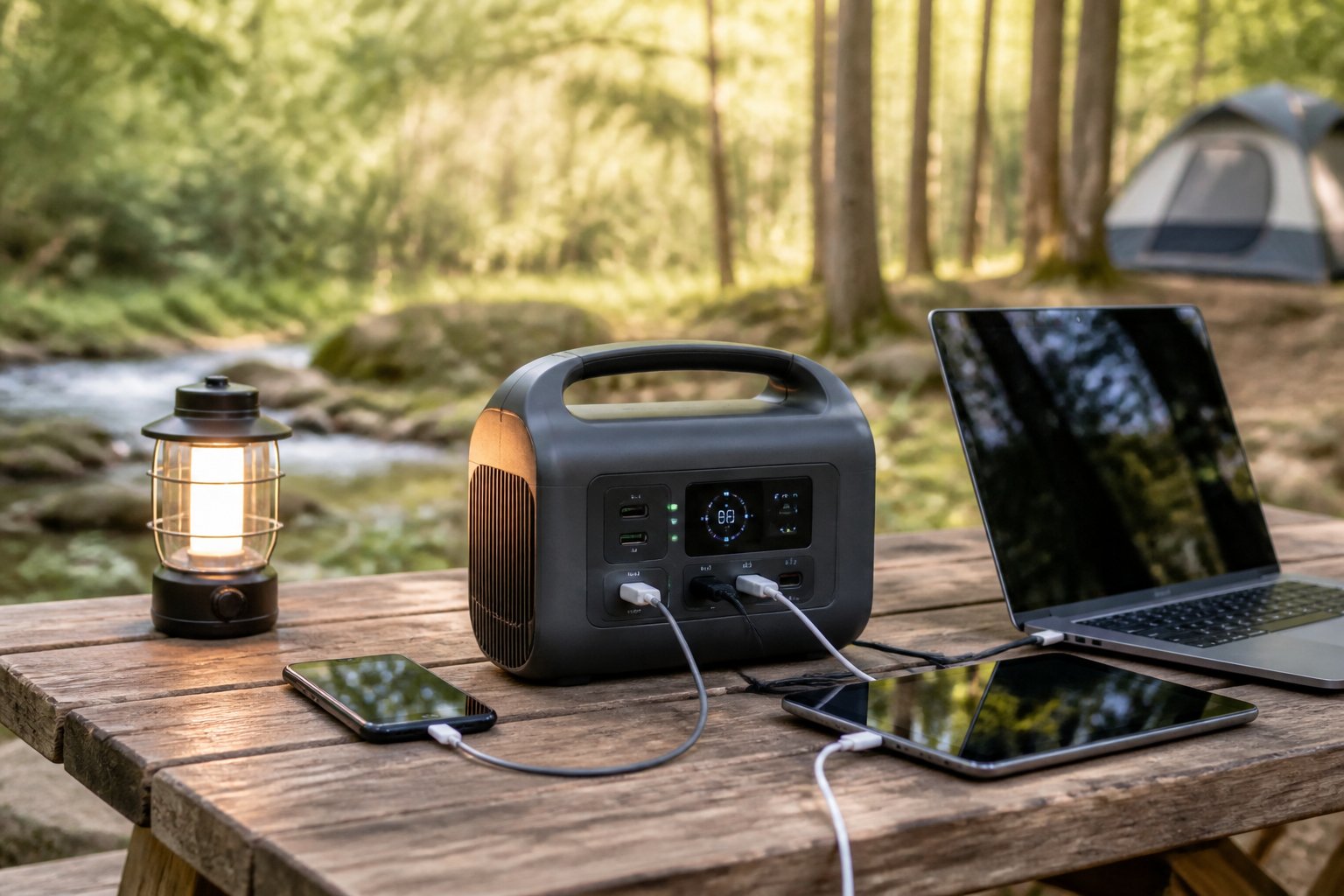
The actual longevity depends on multiple factors beyond just the battery type. Temperature exposure, charging habits, storage practices, and how deeply the battery is discharged all affect how many years a power station remains useful. A unit used daily will reach its rated cycle life much faster than one reserved for occasional camping trips or emergency backup.
This guide examines the key factors that determine how long portable power stations last, from battery chemistry and cycle ratings to real-world runtime calculations and maintenance strategies. Readers will learn how to compare models, extend battery life through proper care, and recognize when a power station needs replacement.
Key Lifespan Factors for Portable Power Stations
The longevity of a portable power station depends primarily on battery chemistry, how deeply and frequently it’s cycled, environmental conditions, and the quality of its battery management system. These factors work together to determine whether a unit lasts 2 years or 10.
Battery Chemistry and Type
The battery chemistry inside a portable power station is the single most important factor affecting lifespan. LiFePO4 (LFP) cells typically deliver 3,000 to 4,000 cycles before dropping to 80% capacity, making them the preferred choice in 2026. NMC (nickel-manganese-cobalt) lithium-ion batteries, common in older or budget models, usually provide only 500 to 800 cycles.
LFP chemistry offers superior thermal stability and slower degradation compared to NMC. This means a portable power station with LiFePO4 can maintain reliable performance for 10+ years with daily use, while NMC-based units may need replacement after 2 to 3 years under similar conditions.
The trade-off is weight. NMC batteries are lighter and more energy-dense, which explains their continued use in ultra-portable models. However, for stationary backup or regular camping use, LFP provides far better value over time.
Charge Cycles and Depth of Discharge
A charge cycle represents one full discharge and recharge of the battery. The depth of discharge (DoD) refers to how much capacity is used during each cycle. Running a portable power station from 100% to 0% counts as one full cycle, but partial discharges also accumulate toward total cycle count.
Keeping the state of charge (SOC) between 20% and 80% significantly extends battery life. Deep discharges to 0% increase internal resistance and accelerate capacity loss. Most manufacturers rate cycle life at 80% DoD, meaning discharging to 20% remaining capacity.
Storing a unit at full charge or completely empty for extended periods accelerates calendar aging. Calendar aging occurs even when the battery isn’t being used, with cells degrading faster at extreme SOC levels. The optimal storage charge is typically 40% to 60%.
Usage Patterns and Environmental Conditions
Temperature is the most critical environmental factor affecting portable power station lifespan. Operating or storing units above 85°F (30°C) accelerates chemical degradation inside the cells. Similarly, charging in freezing conditions can cause permanent damage to lithium-ion batteries.
Frequent fast charging generates more heat than slow charging, which stresses the cells and reduces longevity. While convenient, daily use of rapid wall charging creates more thermal stress than solar charging at lower rates. Quality units include thermal management systems to dissipate heat, but extreme conditions still take a toll.
Heavy continuous loads near maximum rated output also generate excess heat. Running a 1,000W portable power station at 900W constantly will degrade it faster than moderate intermittent use at 300-500W.
Battery Management Systems and Firmware Updates
The battery management system (BMS) actively protects cells from overcharging, over-discharging, and thermal damage. A sophisticated BMS monitors individual cell voltages, balances charge distribution, and shuts down the system when parameters exceed safe limits.
Firmware updates can improve BMS performance and extend lifespan by refining charge algorithms and temperature thresholds. Some manufacturers release updates that adjust charging profiles based on real-world data. Connecting a portable power station to Wi-Fi or Bluetooth allows users to install these updates.
Lower-quality units may lack adequate thermal management or cell balancing, leading to premature failure. The BMS quality directly correlates with how well a portable power station ages, even when using identical battery chemistry.
Battery Cycle Life and Capacity Loss Explained
Battery cycle life determines how many times you can charge and discharge a portable power station before its capacity drops noticeably, while calendar aging affects the battery even when it sits unused. Both processes gradually reduce how much energy the unit can store, though at different rates depending on chemistry, usage patterns, and storage conditions.
Understanding Charge and Discharge Cycles
A battery cycle represents the equivalent of using 100% of the rated capacity and recharging it, but this doesn’t require a single complete drain. If you use 40% one day, 30% the next, and 30% later in the week, those partial discharges together count as one full cycle.
Portable power stations track cycles internally through their battery management system. The cycle counter accumulates partial uses until they sum to 100% of capacity.
LiFePO4 batteries typically deliver 2,000 to 6,000+ cycles before dropping to 80% capacity under standard test conditions. Lithium-ion batteries (such as NMC chemistry) usually provide 500 to 1,000 cycles to the same threshold.
Manufacturers test cycle life at controlled temperatures around 25°C and specific charge rates. Real-world conditions vary, so actual cycle counts may differ from lab ratings.
Depth of Discharge and Its Impact
Depth of discharge (DoD) measures how much capacity you use in each cycle. A 100% DoD means draining from full to empty, while a 50% DoD means using half the battery’s capacity before recharging.
Shallower discharge cycles cause less stress on battery cells and extend total cycle life. A battery cycled daily at 50% DoD will typically last significantly longer than one cycled at 100% DoD under otherwise identical conditions.
Deep discharge damage occurs when cells are regularly drained to very low states of charge. Repeatedly running a portable power station to 0% accelerates capacity loss and can trigger early degradation.
Sizing a larger capacity unit for your needs allows shallower daily cycling. A 1,000 Wh station used for 300 Wh per day operates at 30% DoD, reducing wear compared to a 600 Wh unit pushed to 50% DoD daily.
Capacity Loss and Long-Term Degradation
Capacity loss happens gradually as charging cycles accumulate. A unit rated for 3,000 cycles to 80% will slowly lose storage ability until it holds roughly 80% of its original energy after those 3,000 cycles.
The decline is not linear. Early capacity loss is often minimal, with more noticeable drops appearing after hundreds or thousands of cycles depending on chemistry and usage.
LiFePO4 batteries lose capacity more slowly than standard lithium-ion batteries under similar conditions. A LiFePO4 station may retain 90% capacity after 2,000 cycles, while an NMC battery might reach 80% capacity after just 800 cycles.
Heat accelerates degradation. Operating or charging a portable power station in hot environments increases the rate of capacity loss per cycle. Keeping the unit cool during use and charging helps extend battery lifespan.
Calendar Aging and Storage Effects
Calendar aging reduces capacity over time even without charge cycles. A portable power station stored for years will lose usable capacity simply from sitting idle, independent of how often it’s used.
Temperature and state of charge during storage strongly affect calendar aging. Storing a fully charged battery in a hot garage accelerates degradation far more than keeping it at 50-60% charge in a cool, dry space.
Most manufacturers recommend storage mode or maintaining a moderate charge level for long-term storage. Keeping a station at 40-60% capacity minimizes calendar aging compared to storing it fully charged or nearly empty.
Optimal charging practices include avoiding prolonged storage at 100% charge and preventing the battery from sitting at very low states of charge for months. Topping up every few months during storage helps prevent deep discharge damage and preserves long-term capacity.
Runtime Per Charge and Sizing Your Power Station
Runtime hinges on matching battery capacity to your actual power needs, accounting for inverter losses, and understanding how different devices drain energy at different rates. A 500Wh power station won’t power the same loads as a 1000Wh model, and real-world performance always falls short of theoretical calculations.
Understanding Watt-Hours and Battery Capacity
Watt-hours (Wh) measure the total energy a power station can store and deliver. This metric determines how long devices will run before the battery depletes.
Battery capacity appears in Wh for portable units and kWh (kilowatt-hours) for larger systems. A 500Wh power station stores half the energy of a 1000Wh model. The basic calculation is straightforward: capacity divided by device wattage equals runtime in hours.
A 500Wh power station running a 50W device theoretically provides 10 hours of use (500 ÷ 50 = 10). A 1000Wh power station doubles that to 20 hours. But this ignores efficiency losses that occur in every real-world scenario.
Larger capacity stations handle higher-wattage appliances and longer runtimes. Usage patterns determine the right size—weekend camping trips need less capacity than daily off-grid living or multi-day power outages.
Inverter Efficiency and Power Output
The inverter converts DC battery power to AC output for standard household devices. This conversion process wastes energy as heat, typically reducing usable capacity to 85-90% of the rated Wh.
A 1000Wh power station with 85% inverter efficiency delivers approximately 850Wh of actual usable power to AC devices. DC ports bypass the inverter entirely, offering higher efficiency for compatible devices like phones and laptops.
Power output matters as much as capacity:
| Component | Function | Typical Range |
|---|---|---|
| AC output | Powers standard appliances | 300W – 3600W continuous |
| DC ports | Direct charging (USB, 12V) | 5W – 100W per port |
| Inverter | Converts DC to AC | 85-90% efficiency |
The inverter also determines what devices the station can physically run. A 500W inverter won’t power a 1500W microwave regardless of battery capacity.
Real-World Runtime Scenarios
Runtime calculations must account for efficiency losses and variable power draws. Refrigerators cycle on and off. Laptops draw more power when charging than when fully charged.
Common runtime examples for a 1000Wh power station:
- Smartphone (15W): ~57 full charges
- Laptop (65W): ~13 hours of use
- CPAP machine (40W): ~21 hours
- Mini fridge (50W average): ~17 hours
- LED TV (80W): ~10.5 hours
- Electric blanket (200W): ~4 hours
These numbers assume 85% efficiency. Cold temperatures below 32°F reduce capacity by 10-20%. Running multiple devices simultaneously creates additional overhead.
A 500Wh power station cuts these runtimes roughly in half. Heavier loads like microwaves or hair dryers drain batteries in minutes rather than hours, making power station lifespan dependent on how users balance capacity against demand.
Load Management and Efficiency Tips
Smart load management extends runtime per charge significantly without requiring a larger battery. Prioritizing essential devices and optimizing charging methods reduces waste.
Turn off the AC inverter when using only DC ports. USB and 12V charging bypasses conversion losses entirely. Many power stations draw 5-10W just keeping the inverter active with no load.
Avoid phantom loads by unplugging devices when not actively charging. Leaving phone chargers connected drains power even when phones reach 100%.
Stagger high-draw appliances rather than running them simultaneously. A microwave and coffee maker together stress the inverter and reduce overall efficiency.
Use eco mode if available—it automatically powers down the inverter during idle periods. Keep the power station at room temperature since cold batteries deliver less capacity and hot conditions accelerate degradation.
Monitor wattage usage through the display or app to identify unexpectedly high draws. Small adjustments to usage patterns often extend runtime by 15-25% without limiting functionality.
Charging, Maintenance, and Best Practices to Extend Lifespan
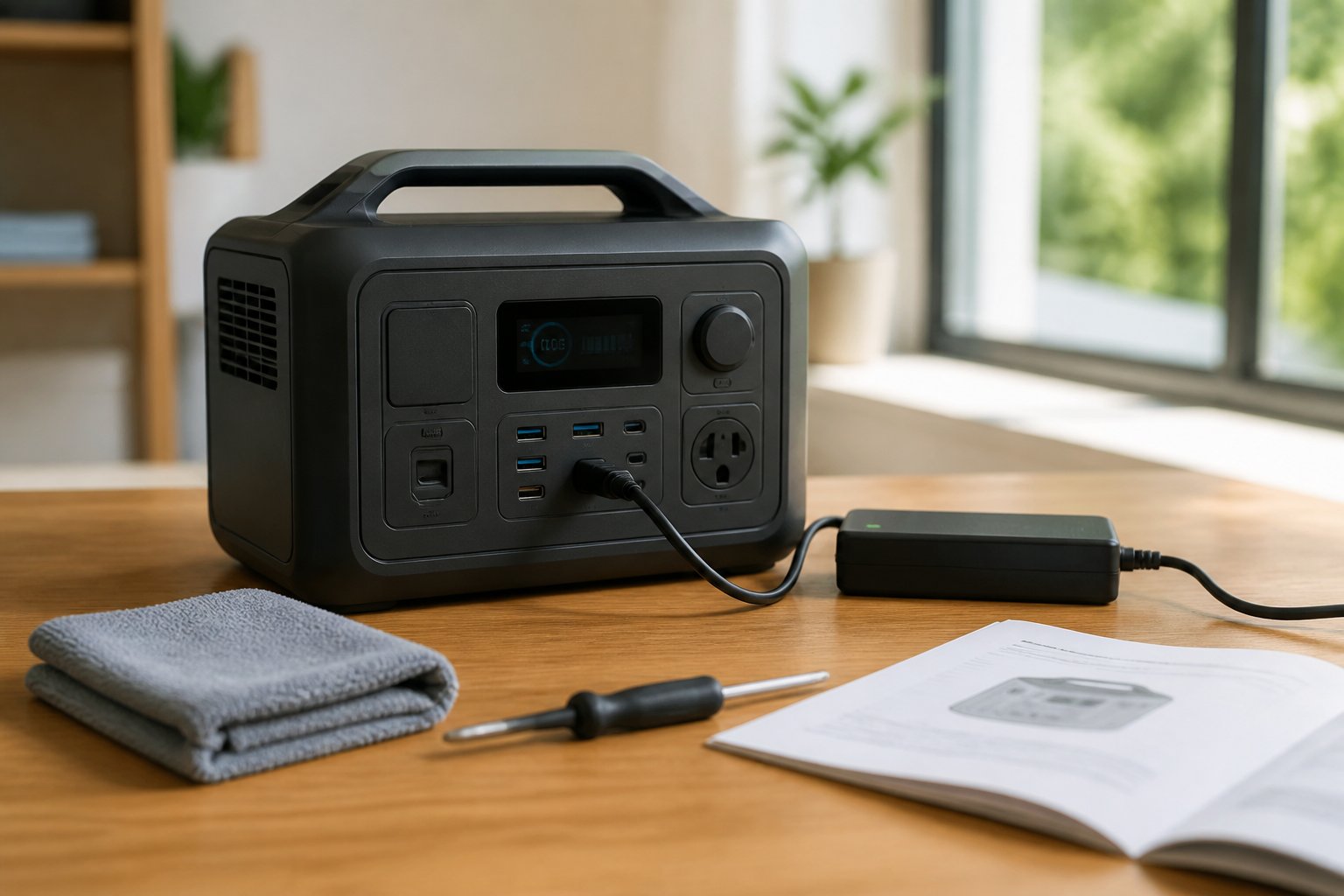
Proper charging habits and temperature control are the two most critical factors in extending battery life, while firmware updates and responsible recycling ensure long-term reliability and environmental stewardship.
Optimal Charging Habits
The way users charge their portable power stations directly impacts lifespan. Maintaining a charge level between 20% and 80% reduces stress on battery cells compared to frequent full cycles. This practice applies to both AC charging and solar input methods.
AC charging provides faster speeds but generates more heat than solar charging. Users should avoid relying exclusively on rapid charging features, as the added thermal stress accelerates degradation. Solar charging through an MPPT controller offers a gentler alternative that produces less heat during the process.
Deep cycling the battery to 5% and back to 100% every three months helps calibrate the internal battery management system. This maintenance schedule ensures accurate charge level readings. Between calibration cycles, users should keep the unit partially charged rather than storing it at 0% or 100%.
When the power station isn’t in use for extended periods, charging it to 50-60% before storage prevents parasitic drain from depleting the battery completely. Most modern units consume small amounts of power even when idle, so checking the charge level every few months is essential.
Temperature Management and Storage Tips
Temperature extremes shorten battery life more than any other factor. Lithium batteries perform best between 32°F and 104°F, with ideal storage temperatures between 50°F and 77°F.
Storing units in hot vehicles or direct sunlight can push internal temperatures above 120°F, causing permanent capacity loss. Similarly, freezing conditions below 32°F reduce performance and can damage cells if the unit is charged while cold. Users should bring power stations to room temperature before charging in winter conditions.
Cooling fans in many models activate during heavy loads or charging, helping maintain thermal stability. These fans should never be blocked during operation. When storing the unit for months, keeping it in a climate-controlled space at partial charge preserves battery health better than leaving it in garages or sheds with temperature fluctuations.
Storage mode, available on some newer models, reduces parasitic drain by disabling certain background functions. This feature helps maintain charge levels during long-term storage without requiring frequent recharging.
Firmware and Predictive Maintenance
Manufacturers regularly release firmware updates that optimize battery management and charging algorithms. These updates can improve thermal management and extend cycle life by refining how the system handles power delivery.
Checking for firmware updates every few months ensures the unit benefits from the latest improvements. Many brands now offer app-based monitoring that tracks battery health metrics and cycle counts. This predictive maintenance approach alerts users to potential issues before they cause failures.
Users should inspect ports and vents quarterly for dust buildup, which can obstruct cooling fans and reduce thermal stability. Wiping down the exterior and checking cable connections prevents performance issues. Following these maintenance tips takes minimal time but significantly impacts longevity.
Battery Recycling and Environmental Considerations
Portable power stations contain valuable materials that should never end up in landfills. When units reach end of life, typically after 3,000+ cycles, proper battery recycling recovers lithium, cobalt, and other elements for reuse.
Most manufacturers offer take-back programs or provide information about certified recycling centers. Call2Recycle and similar organizations accept lithium batteries at thousands of locations. Users should discharge the unit to around 30% before transporting it for recycling, as this reduces fire risk during handling.
Some newer models are designed with replaceable battery packs, allowing users to extend the product’s useful life beyond the original cells. This approach reduces electronic waste and provides a more sustainable option than replacing the entire unit.
Brand and Model Comparisons for Longevity and Use Cases
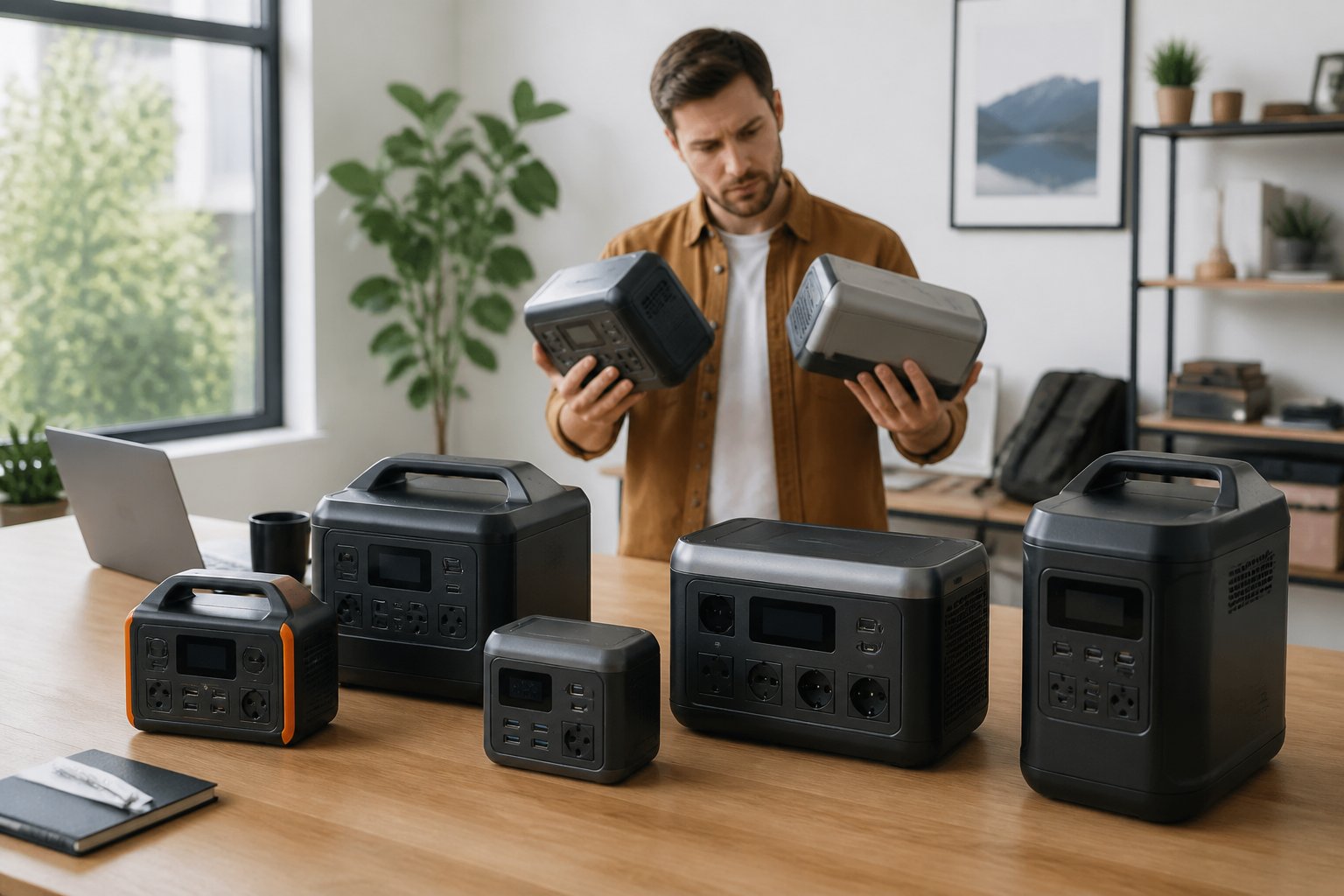
Different brands prioritize different strengths, from cycle ratings to solar compatibility to peak output capacity. EcoFlow, Bluetti, Jackery, and Goal Zero dominate the market with distinct approaches to battery chemistry, warranty coverage, and real-world durability that directly impact how long your investment remains useful.
Popular Long-Lasting Models and Their Ratings
The EcoFlow Delta Pro stands out with a 3,500-cycle LiFePO4 battery rating and 3,600Wh capacity, making it one of the best portable power stations for users who need both longevity and substantial power reserves. At roughly $0.86 per cycle based on typical pricing, it competes favorably against shorter-lived alternatives.
EcoFlow Delta 2 offers 3,000 cycles in a more compact 1,024Wh package. It targets users who want LFP longevity without the Delta Pro’s size and cost. The battery management system includes app-controlled charge limiting to extend lifespan.
Bluetti AC200P delivers 3,500+ cycles with 2,000Wh capacity. Bluetti’s conservative BMS settings sacrifice some peak performance for enhanced battery protection during temperature extremes. The unit weighs 60 pounds but provides exceptional durability for stationary home backup applications.
The Jackery Explorer 1000 Pro uses LFP cells rated for 2,000 cycles. While the cycle count trails EcoFlow and Bluetti flagships, Jackery’s widespread service network and proven reliability make it a solid mid-range option for occasional emergency backup use.
Goal Zero Yeti 1500X employs NMC chemistry with approximately 500 cycles to 80% capacity. This positions it below LiFePO4 power station competitors for longevity but maintains advantages in weight-to-capacity ratio for users prioritizing portability over total lifespan.
Home Backup and Emergency Power Options
Home backup scenarios demand high cycle life since units may sit idle for months between brief emergency uses. Calendar aging becomes the primary degradation factor rather than cycle count.
EcoFlow Delta Pro supports expandable capacity through additional batteries, reaching 25kWh when fully configured. The Home Integration Kit enables direct connection to home circuits, making it function as a whole-home backup solution rather than just an emergency power source. At 3,500 cycles, it should maintain 80% capacity for 10-15 years even with monthly test cycles.
Bluetti AC200P excels in stationary emergency backup roles. The unit’s weight makes frequent transport impractical, but the robust build quality and thermal management suit garage or utility room installation. Users report minimal capacity loss after 2-3 years of standby emergency duty when stored at 50-60% charge.
For lighter emergency backup needs, the EcoFlow Delta 2 balances portability with sufficient capacity to run essential loads during outages. A 1,024Wh capacity powers refrigerators, medical equipment, and communication devices for 6-18 hours depending on simultaneous load.
Replacement threshold for emergency backup units typically arrives when capacity drops below 70% rather than the standard 80%, since these applications rarely demand full rated capacity.
Fast Charging and Solar-Ready Features
Fast charging trades convenience for slightly accelerated battery aging. Heat generation during rapid charging increases internal stress on cells.
The EcoFlow Delta Pro recharges from 0-80% in 1.8 hours via AC input but allows users to toggle slower charging modes that reduce thermal stress. Solar input accepts up to 1,600W, enabling full recharge in 2.8-5.5 hours depending on panel array size and sunlight conditions.
Bluetti AC200P charges more slowly at 400W maximum AC input, requiring 4.5 hours for a full charge. This conservative charging rate reduces heat buildup and potentially extends cycle life. Solar charging accepts up to 700W input.
Solar charging typically extends battery longevity compared to AC charging since the gradual charge rate keeps cell temperatures lower. The Jackery Explorer 1000 Pro optimizes for solar with an 800W maximum solar input and MPPT controller that maintains charging efficiency across varying sunlight conditions.
Most best portable power stations now include solar-ready MPPT controllers as standard equipment. Goal Zero pioneered this integration but EcoFlow and Bluetti have closed the feature gap in recent model years.
Cost per Cycle and Total Ownership Considerations
Total cost of ownership reveals the true value proposition beyond initial purchase price. Cost per cycle provides the clearest comparison metric across different battery chemistries and price points.
| Model | Approximate Price | Rated Cycles | Cost Per Cycle |
|---|---|---|---|
| EcoFlow Delta Pro | $3,599 | 3,500 | $1.03 |
| Bluetti AC200P | $1,899 | 3,500 | $0.54 |
| EcoFlow Delta 2 | $999 | 3,000 | $0.33 |
| Jackery Explorer 1000 Pro | $1,099 | 2,000 | $0.55 |
| Goal Zero Yeti 1500X | $1,999 | 500 | $4.00 |
The EcoFlow Delta 2 offers the lowest cost per cycle among mainstream models. Users cycling daily would spend $0.33 per full discharge, reaching the 80% capacity threshold after roughly 8 years at a total effective cost of $999 for 3,000 cycles of use.
NMC-based units like the Goal Zero Yeti 1500X carry significantly higher cost per cycle despite competitive initial pricing. At $4.00 per cycle, the total cost of ownership over equivalent usage periods runs 7-12 times higher than LiFePO4 alternatives.
Warranty coverage affects total ownership costs when factoring replacement risk. EcoFlow provides 5-year warranties on Delta series units, while Bluetti offers 4 years on the AC200P. These warranties typically cover capacity retention to 60-80% depending on the model.
Emerging solid-state batteries promise 5,000+ cycles but remain commercially unavailable in portable power stations as of 2026. Current LFP technology represents the practical longevity ceiling until next-generation chemistries reach mass production.