
Portable power stations have become essential companions for outdoor adventures, emergency preparedness, and off-grid living. These compact devices offer a clean, quiet alternative to traditional gas generators, but many people don’t fully understand what makes them tick. A portable power station works by storing electrical energy in an internal rechargeable battery and converting it into usable AC or DC power through an inverter, allowing users to charge and run devices anywhere without access to the grid.
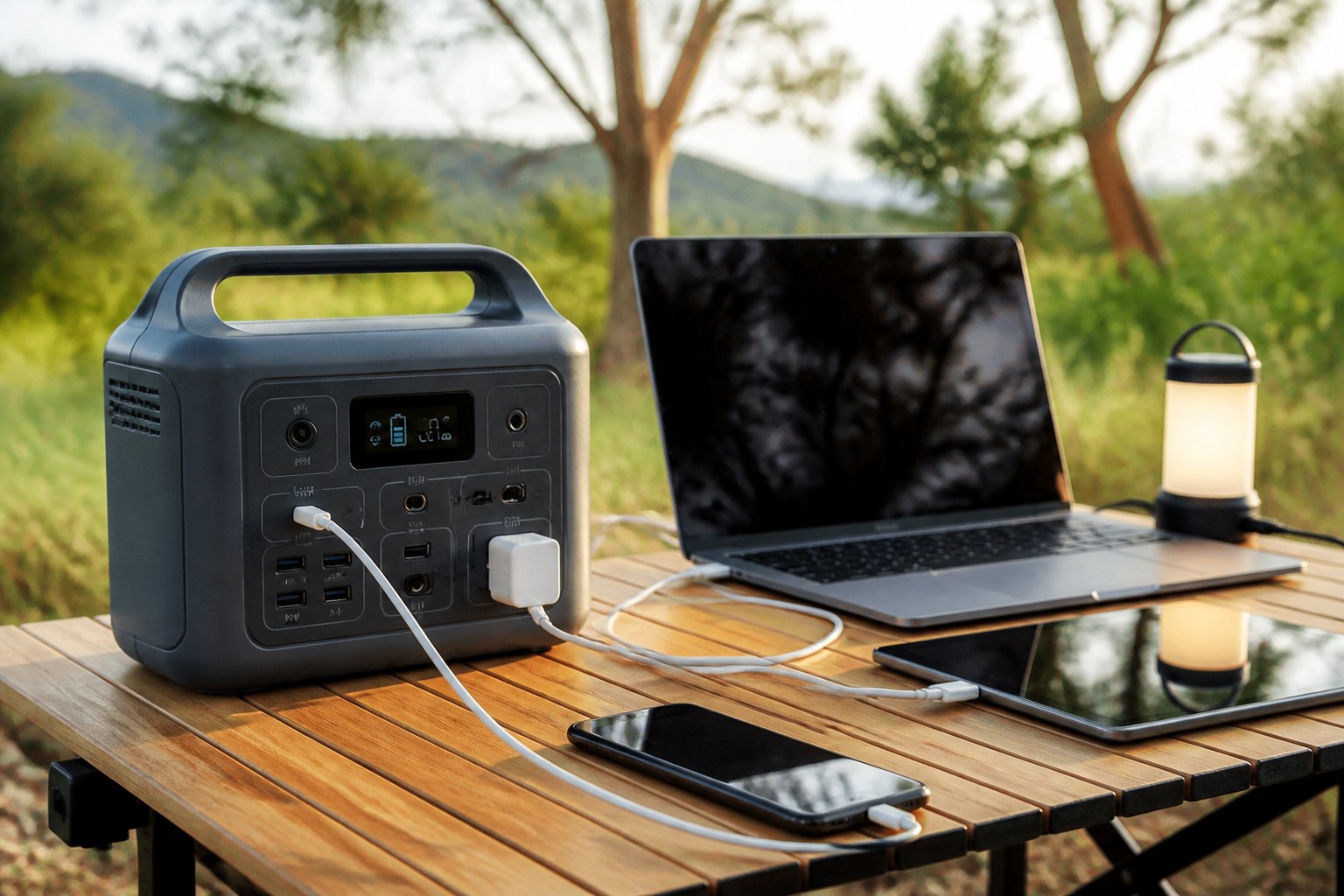
Unlike basic power banks that only handle small electronics, these battery-powered devices pack enough capacity to run laptops, mini-fridges, medical equipment, and even some household appliances for hours at a time. The technology behind them involves several key components working together to capture, store, and distribute energy safely and efficiently. Understanding how these systems operate helps users make informed decisions about capacity needs, recharging options, and practical applications.
This guide breaks down the inner workings of portable power stations, from their core components and energy storage capabilities to the various ways they can be recharged and used. Readers will learn about different output types, safety features that protect both devices and users, and how to select the right model based on specific power requirements and use cases.
Core Components and Power Flow
A portable power station contains three primary systems that work together to store electrical energy and deliver it safely to connected devices. The battery pack stores energy, the inverter converts DC power to AC power for household devices, and the battery management system monitors and protects all operations.
Battery System and Storage
The battery pack serves as the energy storage core of any portable power station. Most modern units use either lithium-ion or lithium iron phosphate (LiFePO4 or LiFePO₄) chemistry. LiFePO4 batteries typically last 3,000-3,500 charge cycles to 80% capacity, while standard lithium-ion batteries usually provide 500-800 cycles.
Capacity is measured in watt-hours (Wh), which indicates how much power the station can deliver over time. A 500Wh battery can theoretically power a 50W device for 10 hours. However, 10-20% of stored energy is lost during conversion, so users should account for this inefficiency when calculating runtime.
The battery management system continuously tracks state of charge and battery health. This monitoring ensures the pack operates within safe voltage and temperature ranges while maximizing lifespan through optimized charging and discharging patterns.
Inverter Technology and Power Conversion
The inverter converts the battery’s DC power into AC power that household appliances require. A pure sine wave inverter produces smooth, clean electricity identical to grid power, making it safe for sensitive electronics like laptops and medical devices. Modified sine wave inverters cost less but can damage certain equipment or cause inefficient operation.
Power stations include both AC outlets and DC outputs to accommodate different devices. AC output typically ranges from 300W to 3,600W depending on the model, with surge capacity allowing brief spikes up to 50-100% higher for motor-starting loads. DC outputs include 12V DC ports for car accessories, USB-A ports for phones and tablets, and USB-C ports offering faster charging speeds up to 100W.
Battery Management System (BMS) and Safety Controls
The BMS acts as the intelligence hub, protecting the battery and connected devices through multiple safety mechanisms. Short-circuit protection immediately cuts power when detecting electrical faults. Overload protection prevents draws exceeding rated capacity from damaging internal components.
Temperature monitoring tracks both battery and inverter heat levels. When temperatures exceed safe thresholds, the system reduces output or shuts down completely. The BMS also balances individual battery cells during charging and discharging to maintain uniform performance.
Temperature control extends battery life by preventing operation in extreme conditions. Most units function between 32°F and 104°F, with the BMS limiting charge rates in cold weather and implementing thermal management during heavy loads or high ambient temperatures.
Power Inputs and Recharging Methods
Portable power stations accept multiple charging methods to suit different situations and environments. AC wall charging offers the fastest speeds for home use, solar panels provide renewable energy for off-grid scenarios, and car charging enables recharging during travel.
AC Charging
AC charging converts standard household electricity into DC power that the internal battery can store. This method uses the power station’s built-in charger to handle the conversion automatically.
Most units accept input ranging from 100W to 2000W depending on the model. Budget power stations typically charge at 100-200W, while high-end models feature fast charging capabilities of 1000W or higher. The charging time depends on battery capacity divided by input wattage, with a 15% efficiency loss factored in.
Typical AC charging speeds:
- 500Wh battery with 200W charger: 3-4 hours
- 1000Wh battery with 1000W charger: 1.5-2 hours
- 2000Wh battery with 500W charger: 5-6 hours
The charging process follows a curve where the first 80% charges quickly and the final 20% slows down significantly. Modern power stations include automatic shutoff at 100% capacity to prevent overcharging. Users should ensure adequate ventilation during charging as the conversion process generates heat, especially during fast charging cycles.
Solar Charging and Renewable Integration
Solar panels connect directly to portable power stations through DC input ports, converting sunlight into stored energy. Most units include an MPPT charge controller that optimizes the solar charging efficiency by adjusting voltage and current to extract maximum power from the panels.
Power stations specify maximum solar input ratings, typically ranging from 200W to 1200W. Users can connect portable solar panels in series to increase voltage or parallel to increase current, staying within the unit’s voltage range (commonly 12-60V DC).
Solar charging performance factors:
- Panel positioning and sun angle
- Weather conditions and cloud cover
- Panel cleanliness and temperature
- MPPT controller efficiency
Real-world solar input often reaches 70-85% of the rated panel wattage under ideal conditions. A 400W solar panel array might deliver 300-340W on a clear day. Charging times vary significantly based on sunlight availability, making solar charging best suited for maintaining charge over multiple days rather than rapid recharging.
Car Charging and Portability
Car charging uses the vehicle’s 12V cigarette lighter or DC port to recharge the power station while driving. This method draws 8-10 amps from the vehicle’s electrical system, providing approximately 100-120W of charging power.
The slow charging speed means car charging works best as a supplementary method during travel. A 1000Wh battery requires roughly 10-12 hours of driving to fully recharge from a 12V source. The vehicle’s engine must be running to prevent draining the starting battery.
Some newer power stations support dual charging, allowing simultaneous AC and solar input to maximize charging speed. This flexibility makes portable power stations adaptable to various environments and power availability situations.
Delivering Power: Output Types and Applications
Portable power stations deliver stored energy through distinct port types, each optimized for specific devices and voltage requirements. Understanding these outputs and their capacity ratings helps users match their power station to real-world needs.
AC, DC, and USB Ports Explained
AC outlets provide standard household power at 120V in North America or 230V in other regions. These ports use an internal inverter to convert the rechargeable battery’s DC power into alternating current suitable for laptops, power tools, and kitchen appliances. Pure sine wave inverters deliver clean AC output that matches grid power quality.
DC outputs supply direct current without conversion losses, making them more efficient for compatible devices. The 12V DC output powers car accessories like portable fridges, tire inflators, and camping lights. Some stations include regulated DC outputs at 5V or 9V for specific electronics.
USB ports come in two primary types. USB-A delivers 5-12V for phones and tablets, typically providing 12-18W per port. USB-C ports support Power Delivery (PD) protocols that can supply up to 100W, enabling fast charging for laptops and drones. Using the appropriate output type minimizes energy waste during power conversion.
Wattage, Watt-Hours, and Device Compatibility
Watts measure instantaneous power draw, while watt-hours indicate total battery capacity. A device pulling 100 watts running for 5 hours consumes 500 watt-hours from the battery-powered device.
Battery capacity determines runtime. A 1,000Wh station powering a 50W device runs for approximately 20 hours (1,000Wh ÷ 50W). However, inverter efficiency typically ranges from 85-90%, reducing actual runtime by 10-15%.
Surge wattage matters for motors and compressors that draw 2-3x their rated power during startup. A 500W refrigerator might need 1,500W briefly. Matching the best portable power station to these peak demands prevents overload shutdowns and ensures reliable backup power for energy independence.
Safety, Efficiency, and Durability Features
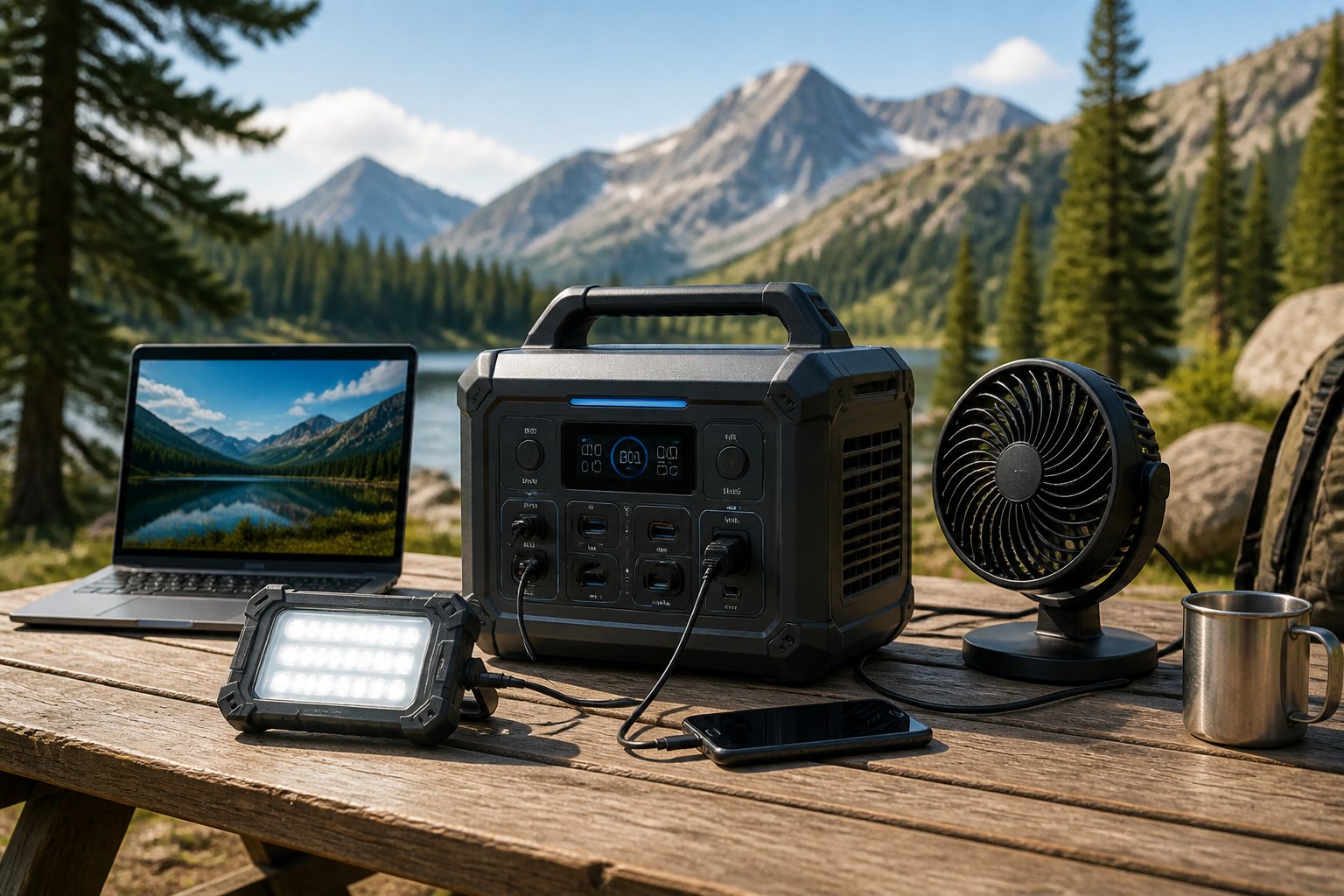
Modern portable power stations incorporate multiple protection systems that prevent damage to both the unit and connected devices. Understanding how these features work helps users maximize battery lifespan and maintain reliable performance over thousands of charge cycles.
Short-Circuit, Overload, and Temperature Protections
The battery management system (BMS) serves as the central control hub for all safety functions. It continuously monitors voltage, current, and temperature at the cell level to prevent dangerous conditions before they occur.
Short-circuit protection activates within milliseconds when the BMS detects abnormal current flow, instantly disconnecting the circuit to prevent sparks or fire. Overload protection works similarly by cutting power when connected devices exceed the station’s rated wattage, though most units provide a brief surge allowance for motor startups.
Temperature monitoring operates on multiple levels. The BMS tracks individual cell temperatures and throttles charging or discharging when readings exceed safe thresholds, typically around 140°F (60°C). Some premium models include active cooling fans that engage automatically during heavy loads. Below-freezing temperatures trigger low-temperature charging protection, which prevents lithium plating damage by reducing or blocking charge current until the battery warms to safe levels.
Extending Battery Life and Health
Battery health depends primarily on managing charge cycles and state of charge properly. LiFePO₄ batteries tolerate deeper discharge cycles than standard lithium-ion, delivering 3,000-5,000 cycles versus 500-1,000 cycles.
Maintaining a 20-80% state of charge during storage significantly extends battery lifespan. The BMS automatically balances cells during charging to prevent capacity drift between individual cells, which degrades performance over time.
Temperature control remains critical for longevity. Storing units in climate-controlled environments between 50-77°F prevents capacity loss from heat exposure or cold-induced degradation. Most modern stations include built-in heating elements or restrict charging below 32°F to protect cell integrity.
Real-Life Uses and Choosing the Right Station
Portable power stations serve critical roles in emergency preparedness, outdoor adventures, and sustainable energy systems. Understanding these applications and matching features to specific needs ensures users select the most effective model.
Backup Power in Emergencies
During power outages from storms or grid failures, portable power stations keep essential devices running without noise or fumes. Models with 2,000-4,000 watt-hour capacity can power refrigerators, medical equipment, and communication devices for 12-24 hours depending on usage.
The Anker F3800 Plus and EcoFlow Delta Pro 3 deliver 4,000-6,000 watts of maximum output, sufficient for multiple appliances simultaneously. These units include wheels for easy repositioning throughout a home during extended outages.
Users should calculate their essential wattage needs by adding up device requirements. A refrigerator typically uses 150-800 watts, while a laptop draws 50-100 watts. Stations with higher watt-hour ratings provide longer runtime before requiring recharge through AC outlets or solar panels.
Outdoor, Off-Grid Living, and Renewable Energy Use
Portable power stations enable off-grid living and outdoor activities by pairing with solar panels for renewable energy independence. Campers and RV users rely on compact models like the Anker Solix C300 DC, which weighs just over six pounds and charges via 28-volt solar input.
Tailgaters and outdoor enthusiasts need mid-size stations with 2,000-2,600 watt outputs to run TVs, sound systems, and mini-fridges. The Bluetti Elite 200 V2 offers 2,073.6 watt-hours of capacity and charges directly from vehicle accessory ports.
For sustained off-grid living, users combine multiple stations or models with expandable battery capacity. Some units feature ingress protection (IP) ratings for dust and water resistance, essential for exposure to outdoor elements.
Selecting Features for Your Needs
Battery capacity determines runtime, measured in watt-hours (Wh). A 300Wh station powers a laptop and phone for a workday, while 2,000Wh+ models support home backup needs.
Key selection criteria:
- Output ports: USB-C, AC outlets, and DC outputs for device compatibility
- Maximum wattage: Match or exceed total device requirements
- Charging methods: AC, solar, and vehicle charging options
- Portability: Weight and built-in wheels for transport
- Recharge time: Faster charging reduces downtime
Users should prioritize stations with sufficient ports for simultaneous device charging. Smart app control and display screens help monitor battery levels and power consumption in real-time.