
Winter temperatures can cripple a portable power station or portable generator when cold batteries refuse to charge, usable capacity drops unexpectedly, and condensation creeps into sensitive electronics. The key to winterizing a portable power station is keeping the battery warm enough to charge safely, protecting the unit from moisture during temperature swings, and adding extra capacity buffers to compensate for cold-weather performance losses. Without proper preparation, owners risk early shutdowns, charging failures, and damage that could have been prevented with a simple winterization routine.
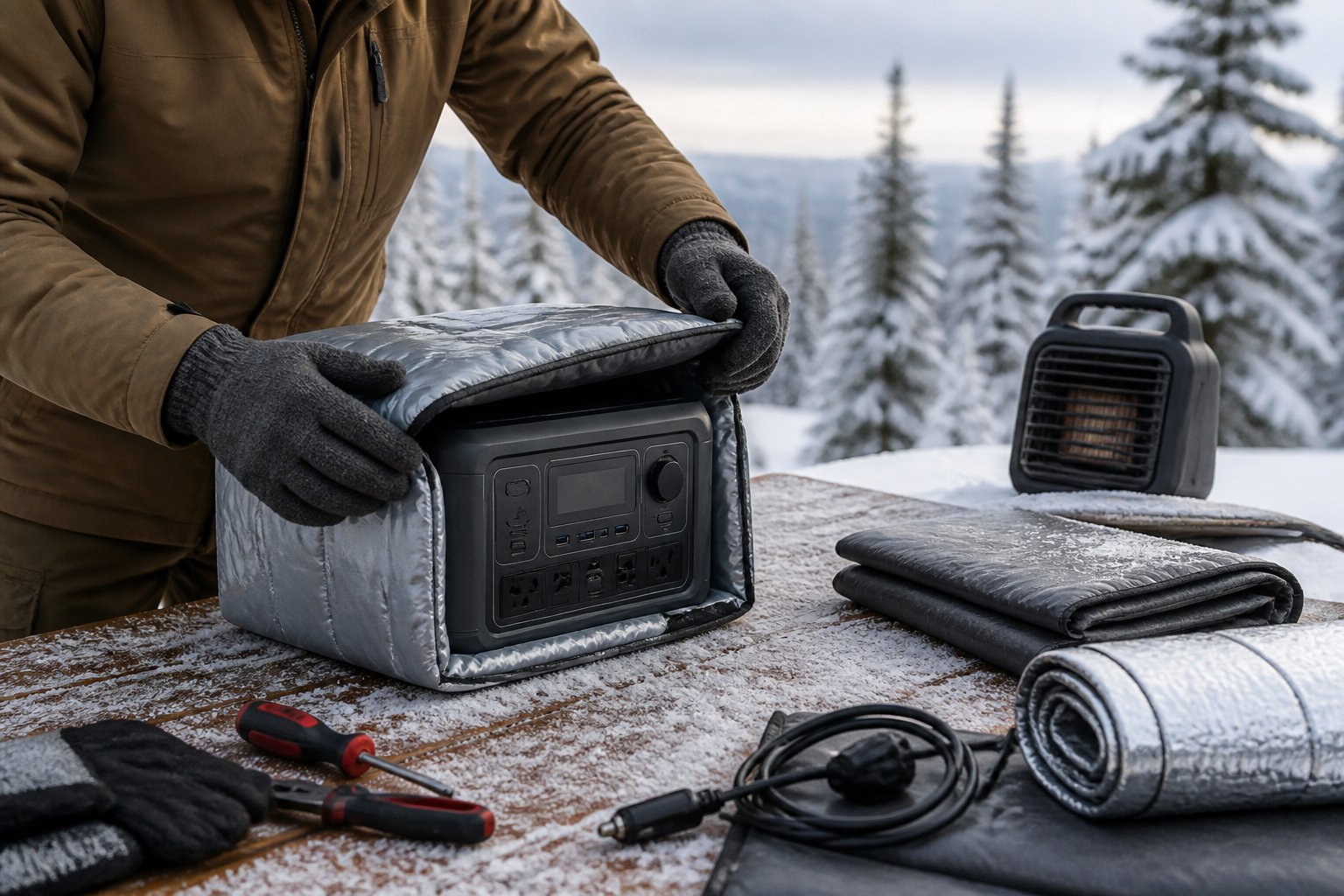
This guide walks through the practical steps needed to prepare a portable power station for freezing conditions, whether it will be stored in an unheated garage, used for winter camping, or staged for emergency backup during storm outages. The process covers storage location choices, battery and charging management, condensation prevention, and the operational adjustments that keep essential loads stable when temperatures drop.
Understanding what cold weather does to lithium batteries, inverters, and charging systems helps owners make smarter decisions about where to store their equipment, when to warm it before use, and how to size backup capacity for winter reliability. The article also addresses the specific challenges modern portable power solutions face and how to bring units back into service safely when spring arrives.
Essential Preparations for Cold Weather Storage
Proper storage preparation protects battery health and ensures reliable performance when the power station is needed again. Maintaining the correct charge level and storage environment prevents degradation during winter months.
Optimal Charge Level and Storage Conditions
The ideal storage charge level for most portable power stations falls between 60-80%. This range prevents stress on lithium cells while maintaining enough charge to support the battery management system during dormancy.
Storing at full charge or near-empty levels accelerates capacity loss. Battery chemistry degrades faster at voltage extremes, particularly in cold environments. Users should check the charge level every 4-6 weeks during extended storage and top up if it drops below 50%.
Temperature stability matters as much as charge level. The storage area should maintain temperatures between 32°F and 77°F when possible. Extreme cold increases internal resistance, while temperature swings create condensation risk inside the unit.
Unlike portable generators that require fuel stabilizer or complete fuel drainage to prevent stale fuel issues, portable power stations need only charge management and climate control for successful winter storage.
Cleaning and Inspecting Devices
Dust, debris, and moisture accelerate corrosion during storage periods. Users should wipe down the exterior with a dry cloth and inspect all port openings for accumulated dirt or particles.
Port covers must be securely closed or covered with tape to prevent moisture intrusion. Condensation forms when warm humid air contacts cold surfaces, and open ports create entry points for moisture to reach internal components. A visual inspection of cable connections and the display screen identifies damage before storage.
Check for physical damage including cracks in the housing, loose panels, or damaged connectors. Address these issues before storage rather than discovering them during an emergency.
Choosing the Right Storage Location
Indoor storage in climate-controlled spaces provides the most reliable protection. Basements, closets, and interior rooms maintain stable temperatures and avoid the moisture swings common in garages and sheds.
If indoor storage isn’t available, insulated areas work as secondary options. The unit should sit elevated on a shelf or pallet, never directly on cold concrete floors. Garage storage requires extra attention to temperature monitoring and condensation prevention.
Avoid storing near windows with direct sunlight exposure, heating vents that create temperature extremes, or areas prone to flooding. The location should allow airflow around the unit rather than tight enclosure. Battery warmers designed for vehicle batteries can maintain safe temperatures in unheated spaces, though they consume power and require monitoring.
Keep the power station away from flammable materials and ensure the storage spot remains accessible for periodic charge checks.
Fuel and Battery Maintenance Best Practices
Portable power stations with lithium batteries require different care than fuel-powered generators, while gas generators need fuel management alongside winterization. Battery temperature management prevents charging damage, and proper storage intervals maintain cell health through winter months.
Dealing With Fuel: Stabilizers and Freshness
Portable power stations typically don’t use fuel, but hybrid units or paired generators do require fuel maintenance. Gas generators need fuel stabilizer added to prevent degradation during storage. Fresh fuel contains volatile compounds that evaporate over time, leaving behind varnish and deposits that clog carburetors.
Add fuel stabilizer at the manufacturer’s recommended ratio before winter storage. Run the engine for 5-10 minutes after adding stabilizer to circulate treated fuel through the carburetor and fuel lines. Some users prefer draining the tank completely and running the engine dry, which eliminates stale fuel concerns entirely.
Stale fuel causes hard starts and rough running when spring arrives. Fuel begins degrading within 30 days without stabilizer, and winter storage often exceeds this window. If storing a generator alongside a battery power station, treat or drain fuel before the first hard freeze to avoid cold-related fuel system problems.
Protecting Batteries in Low Temperatures
Lithium batteries lose usable capacity in cold conditions and face charging restrictions below freezing. Most units reduce or stop charging when internal sensors detect temperatures near or below 32°F to prevent permanent damage. Store the power station in a climate-controlled space rather than an unheated garage or vehicle.
Battery warmers or insulated storage boxes help maintain safe operating temperatures for units that must stay in cold spaces. Bring the unit indoors and allow it to warm gradually before attempting to charge. Forcing a charge on a cold-soaked battery can cause lithium plating and reduce long-term capacity.
Cold batteries also show higher voltage sag under load, triggering early low-battery cutoffs. A warm battery delivers more usable energy than a cold one at the same state of charge. Position the unit away from cold drafts and concrete floors during winter use.
Understanding Self-Discharge and Recharge Intervals
Lithium batteries self-discharge slowly even when not in use, typically losing 1-3% capacity per month at room temperature. Cold storage slows this rate slightly, but batteries stored for extended winter periods still need periodic recharging to prevent deep discharge damage.
Check battery levels every 4-6 weeks during winter storage and recharge to 50-80% if the level drops significantly. Storing at full charge for months can stress cells, while storing near empty risks falling below safe discharge thresholds. Most manufacturers recommend a mid-range charge level for long-term storage.
Set a calendar reminder for winter recharge intervals rather than waiting until spring. A battery that drops too low may refuse to charge or require special recovery procedures. This maintenance cycle takes only 15-30 minutes every month or two but prevents costly battery replacement.
Protecting Performance During Operation
Winter operation requires attention to charging temperature, physical protection from the cold, and practical adjustments for different use environments. These practices ensure the portable power station delivers consistent power when outdoor temperatures drop.
Safe Charging and Discharge Practices
Charging temperature restrictions are more critical than discharge limits for most lithium battery systems. Many portable power stations automatically reduce or stop charging when battery temperature falls below 32°F (0°C), and forcing charge into a frozen battery can cause permanent damage.
The safest workflow involves warming the unit first, charging second, and loading last. Users should bring the power station into a warmer space or storage area before connecting AC, solar, or car charging inputs. Once the battery reaches safe temperature range, typically above 41°F (5°C) for most models, charging can proceed normally.
During discharge, portable power stations typically function down to -4°F (-20°C), though usable capacity decreases and voltage sag increases under load. Heavy draw devices like portable generators or high-wattage appliances may trigger earlier low-battery cutoffs in cold conditions. Testing essential loads before an actual outage or camping trip reveals whether the station can maintain stable output at expected winter temperatures.
Use of Insulation and Battery Warming Accessories
Battery warmers designed for portable power stations use low-wattage heating elements to maintain safe operating temperature. These accessories draw power from the station itself or an external source, making them practical for vehicle-based setups or extended outdoor use where the station must remain operational in freezing conditions.
Passive insulation like foam pads or neoprene sleeves can slow heat loss but should never block ventilation ports. Unlike an engine block heater that can safely enclose components, portable power stations generate heat during operation and require airflow around cooling vents. Wrapping the unit in blankets while running high loads traps heat in the wrong locations and risks thermal shutdown or component stress.
For overnight camping, placing the power station inside a tent vestibule or vehicle cabin provides moderate temperature protection. Users should position the unit on a dry elevated surface, away from condensation zones near tent walls or vehicle windows.
Adapting to Outdoor and Emergency Scenarios
Winter camping requires balancing temperature protection with ventilation and moisture management. Keeping the portable power station inside an insulated cooler with ventilation holes cut near the base provides thermal mass while maintaining airflow. The cooler should remain unsealed at the top to prevent CO₂ buildup if used in enclosed spaces.
During home power outages, staging the station in a basement or interior room maintains warmer ambient temperature compared to unheated garages. Users running a portable generator for backup charging should charge the power station indoors afterward, allowing both units to acclimate before recharging cycles begin.
Vehicle-based scenarios present rapid temperature swings as cabins warm and cool. Mounting the station in a stable location away from dashboard heat vents and avoiding icy trunk storage prevents thermal shock. Cable management becomes more important in cold weather, as stiffened jacket insulation increases voltage drop on long runs, particularly with 12V DC appliances that draw higher current than AC equivalents.
Special Considerations for Modern Portable Power Solutions
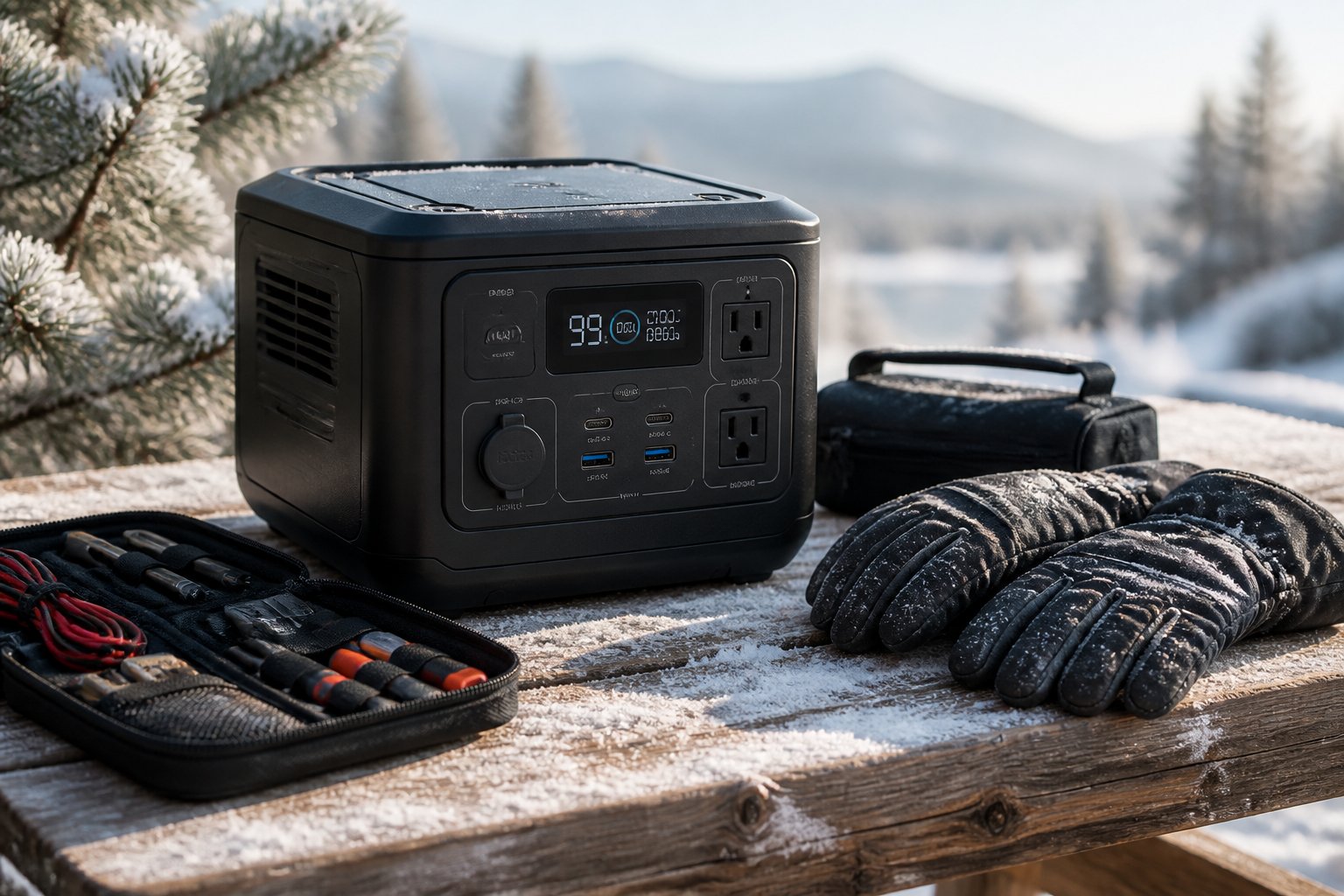
Advanced portable power stations and solar generators have specific winter requirements that differ from basic models, particularly in their thermal management systems and hybrid capabilities. Newer units often include built-in protections that automatically adjust charging rates and discharge parameters based on temperature.
Insights Into Solar Generator Winter Care
Solar generators face unique winter challenges that extend beyond the battery unit itself. Solar panel efficiency drops in cold weather not because of temperature but due to shorter daylight hours, lower sun angles, and potential snow coverage.
The battery management system in modern solar generators typically restricts charging when internal temperatures fall below 32°F. This protection prevents lithium cell damage but can frustrate users who expect continuous solar charging. Pre-warming the battery compartment before sunrise maximizes the charging window during limited daylight hours.
Snow accumulation on panels creates a complete charging failure rather than just reduced output. Panels should be angled steeply in winter to encourage snow to slide off, and mounting them in locations that receive morning sun helps melt overnight accumulation. Dark-colored panels absorb heat better and self-clear faster than lighter models.
Advantages of Advanced Models Like Anker Solix C1000 Gen 2
The Anker Solix C1000 Gen 2 and similar modern units incorporate thermal regulation features that earlier generations lacked. These systems use active heating elements or intelligent charge controllers that monitor cell temperature continuously and adjust power flow accordingly.
Advanced models typically maintain better voltage stability during cold-weather discharge, reducing premature low-battery cutoffs. Their Battery Management Systems can differentiate between temporary cold sag and actual capacity depletion, allowing more usable energy extraction. Some units also feature insulated battery compartments that slow temperature loss during outdoor use.
Fast-charging capabilities in premium models become more restricted in winter. A unit rated for 1000W AC input might automatically throttle to 400W when cold, extending recharge time significantly. Understanding this limitation prevents sizing mistakes when planning backup duration.
Handling Hybrid Power Systems
Hybrid setups that combine AC charging, solar input, and vehicle charging require coordinated temperature management across all inputs. Each charging source responds differently to cold conditions, creating unpredictable recharge scenarios.
Vehicle charging through a 12V port often works better in extreme cold than solar because the vehicle cabin provides ambient warmth and the alternator delivers consistent voltage. However, extended idling in freezing weather to charge a power station wastes fuel and risks carbon monoxide accumulation in enclosed spaces.
Prioritizing warm storage locations over maximizing solar exposure usually yields better winter results. A power station kept at 50°F indoors charges more reliably from any source than a unit maintaining 20°F outdoors with full sun access. Users should establish a rotation schedule that brings the unit inside for warming and charging, then deploys it for temporary outdoor loads.
After Winter: Safe Recommissioning and Ongoing Maintenance
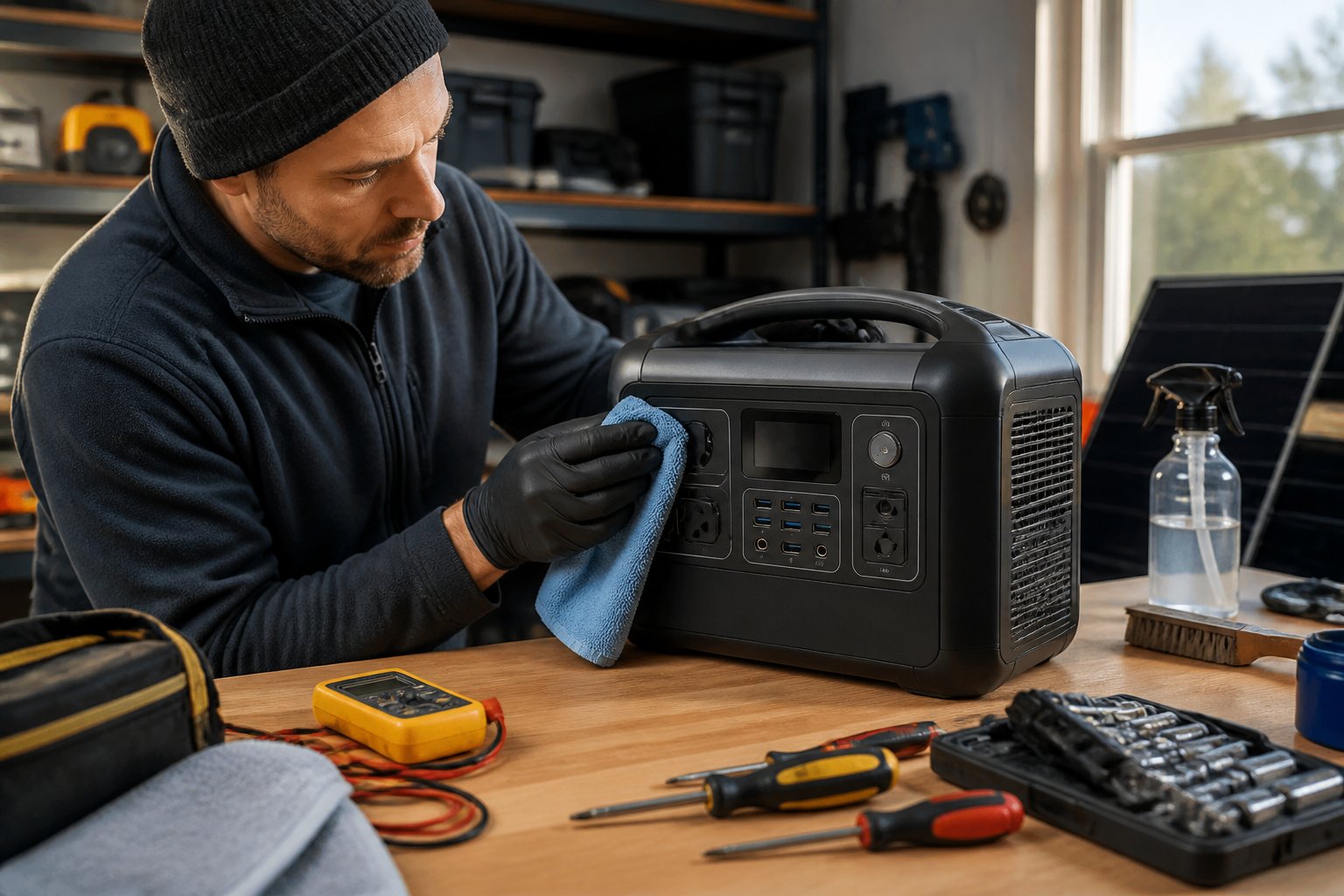
Spring temperatures don’t mean your portable power station is automatically ready for use. Batteries stored in cold conditions need proper inspection and gradual reintroduction to normal operating cycles to prevent damage and ensure reliable performance throughout the coming year.
Checking Components Before First Use
Before plugging in or turning on a power station that’s been stored through winter, perform a thorough visual inspection. Check for condensation inside display screens or around charging ports, which can indicate moisture infiltration during temperature fluctuations. Wipe down all surfaces and ensure ports are completely dry before connecting any cables.
Examine the battery case for any cracks, bulges, or deformation that might have occurred from extreme cold. Even small cracks can compromise battery safety and should be addressed immediately. Check all cables and connectors for brittleness, as cold temperatures can make rubber insulation stiff and prone to cracking.
Test the charge level with a gentle power-on. A power station that was stored at 50-80% charge should still show similar levels if self-discharge remained normal. A dramatic drop might indicate cell degradation that occurred during storage.
Reintroducing Fuel and Power
Allow the power station to reach room temperature (65-75°F) before attempting any charging. This acclimation period typically takes 3-4 hours for units stored in unheated spaces. Rushing this step risks thermal shock to battery cells.
Start with a partial charge cycle rather than immediately charging to 100%. Charge to approximately 50% first, then let the unit rest for an hour. This gentle approach allows the battery management system to recalibrate and ensures cells accept charge uniformly. Complete the charge to 100% during a second session.
Perform a controlled discharge test by running a moderate load (like a lamp or fan drawing 50-100W) for 1-2 hours. Monitor the power station’s temperature and performance. The unit should maintain stable output without unusual heat buildup or voltage drops.
Routine Testing and Preventative Tips
Establish a monthly maintenance schedule during active seasons. Run the power station through a complete charge-discharge cycle every 30-45 days, even if you haven’t needed it for backup power. This practice keeps battery cells balanced and prevents capacity degradation from prolonged inactivity.
Monitor self-discharge rates by checking charge levels weekly for the first month after winter storage. A quality portable power station should lose no more than 3-5% charge per month at room temperature. Higher rates suggest potential battery issues that developed during winter.
Clean cooling vents and fans before summer use, as dust and debris accumulation during winter storage can restrict airflow. Update firmware if your model supports it, as manufacturers often release cold-weather protection improvements that enhance battery management for next winter.