
A 500W portable power station offers a practical middle ground for emergency backup power and outdoor adventures, but understanding its real capabilities prevents disappointment. A 500W power station can comfortably run phones, laptops, tablets, routers, LED lights, fans, CPAP machines, small TVs, and camera gear, but typically cannot handle high-heat appliances like microwaves, hair dryers, space heaters, or most coffee makers. The key to making the most of this class of portable power lies in knowing both what the inverter can handle at any moment and how long the battery will actually last.
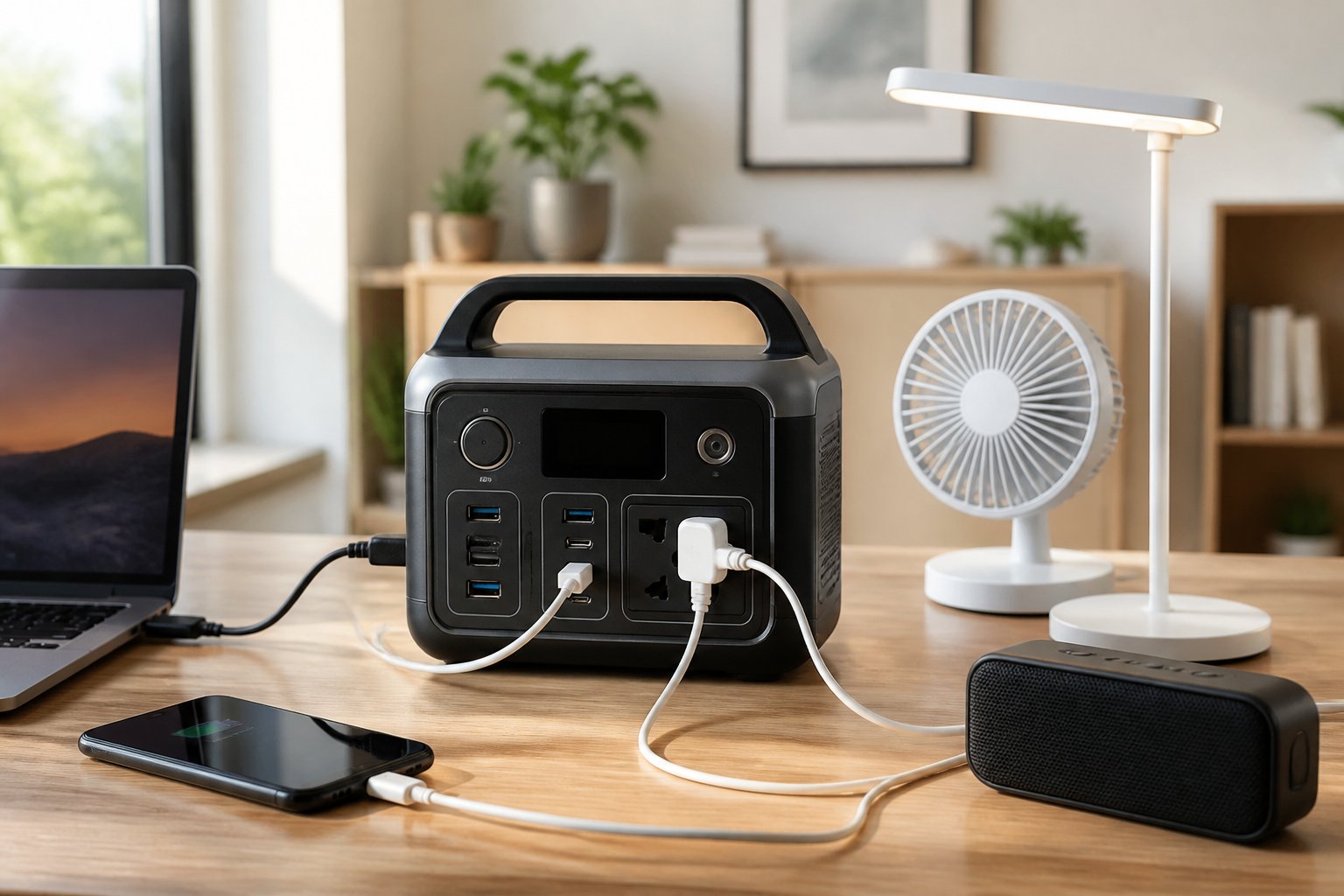
Many buyers focus only on the wattage rating without considering battery capacity, surge requirements, or efficiency losses. A 500W rating describes the maximum continuous output, not runtime or total energy storage. This distinction matters because a device that falls within the 500W limit might still drain the battery faster than expected or fail to start if it requires a brief surge above that threshold.
This guide breaks down the specifications that matter for home backup and portable power needs, provides realistic runtime calculations, and explains which devices work well with a 500W station and which do not. It also covers surge protection considerations and how solar integration can extend usability for longer trips or extended outages.
Understanding 500W Power Station Specifications
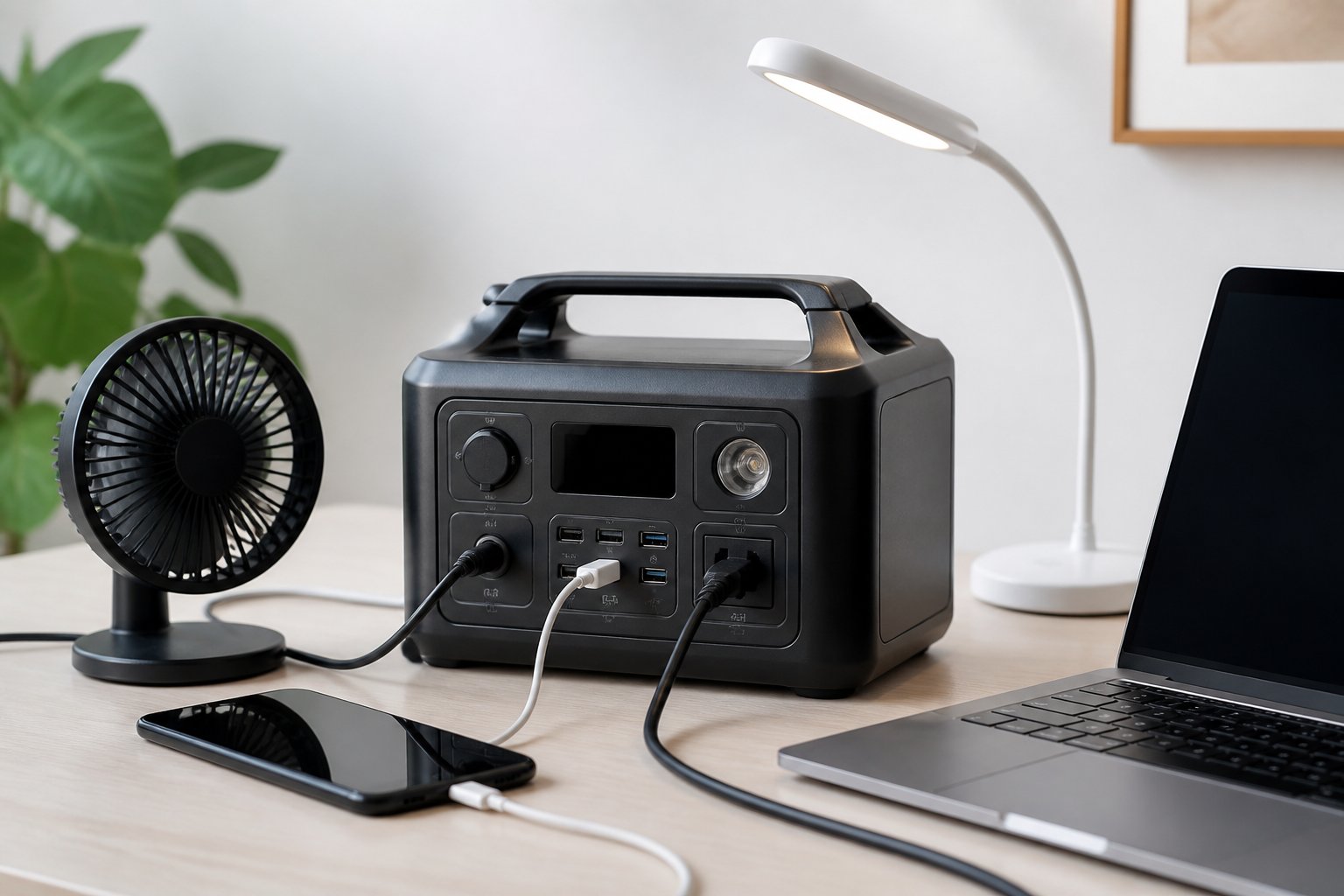
A 500W power station’s actual capabilities depend on three distinct specifications: the continuous wattage it can deliver, the total watt-hours stored in the battery, and how efficiently the inverter converts that stored energy. These numbers determine which devices will run and for how long.
How Watts, Watt-Hours, and Battery Capacity Affect Usage
Watts (W) measure the rate of power consumption at any given moment, while watt-hours (Wh) represent the total energy storage capacity of the battery. A device that draws 50W running for 10 hours consumes 500Wh of energy.
Most 500W portable power stations contain batteries ranging from 300Wh to 600Wh. A 500Wh battery can theoretically power a 50W device for 10 hours, but real-world performance accounts for inverter losses of approximately 10-20%.
The practical formula is: Runtime (hours) ≈ (Battery Wh × 0.80) ÷ Device Watts. A 500Wh unit powering a 40W fan would run roughly 10 hours after accounting for efficiency losses.
Battery capacity matters most for duration, while the inverter’s wattage rating determines which devices can run at all. Battery management systems also protect the cells by preventing complete discharge, which reduces usable capacity by an additional 5-10% in some models.
The Role of the Inverter and Power Output Types
The inverter converts stored DC battery power into AC power for standard devices. A 500W rating means the inverter can deliver up to 500 watts continuously through AC outlets.
Most quality units include a pure sine wave inverter, which produces clean power safe for sensitive electronics like laptops and medical devices. Modified sine wave inverters cost less but may cause issues with certain equipment.
Inverter efficiency typically ranges from 85-90%, meaning some energy converts to heat rather than usable power. Many portable power stations also feature USB ports and USB-C PD ports that bypass the inverter entirely, delivering DC power directly from the battery with less loss. A 100W USB-C PD port charges laptops more efficiently than using the AC inverter with a traditional charger.
Startup Surge Versus Running Watts Explained
Running watts indicate the continuous power a device needs during normal operation, while startup surge refers to the brief spike required when motors or compressors first activate. A mini-fridge might run on 60W but require 180W for 1-2 seconds at startup.
A 500W power station typically offers surge capacity between 800W and 1,000W for these brief peaks. If a device’s startup surge exceeds this threshold, the inverter will shut down to protect itself.
Devices without motors—phones, lights, laptops—have minimal surge requirements and draw nearly identical startup and running watts. Refrigerators, fans with motors, and power tools require careful attention to both specifications before attempting to power them with a portable power station.
Typical Devices and Appliances Supported
A 500W portable power station handles phones, laptops, small fans, mini fridges, and CPAP machines with ease, while also powering LED lights, routers, and camera gear. Device wattage determines what runs and for how long, with the 500Wh capacity providing several hours to multiple days depending on the load.
Small Electronics and Gadget Charging
Phone charging is one of the most efficient uses for a 500W power station. Most smartphones require 10-20W to charge, allowing a 500Wh battery to provide 25-50 full charges. Tablets draw slightly more at 15-30W but still offer 15-30 recharges from a single power station charge.
Laptop charging varies widely based on model and usage. Standard laptops consume 45-90W, giving users 5-10 hours of runtime or multiple full charges on a 500Wh capacity unit. Gaming laptops demand more power at 120-180W, reducing runtime to 2-4 hours.
Popular models like the Jackery Explorer 500, EcoFlow River 2, and Bluetti EB3A excel at electronics charging. These units include multiple USB ports, USB-C PD ports, and AC outlets for simultaneous device charging. The battery pack design in these models uses lithium chemistry for stable, long-lasting power delivery.
Cameras, drones, and action camera batteries can be recharged dozens of times. The appropriate cables for each device ensure efficient charging without power loss through conversion.
Low-Power Appliances for Home and Camping
LED lights operate on just 5-15W, running for 30-100 hours on a 500Wh battery. String lights for camping draw similar power, creating ambient lighting for entire weekends without significant battery drain. Routers and modems consume 10-30W, keeping internet connections active for 15-50 hours during outages.
Small fans are highly practical for a 500W portable power station. A USB fan uses 5-10W and runs 40-85 hours. Mid-size fans at 20-50W operate for 8-20 hours, providing cooling throughout hot camping nights or during power outages.
Portable speakers draw 10-50W, delivering 10-50 hours of music. Bug zappers require 10-40W and run all night on minimal power. Coffee makers work but demand 600-1200W, limiting them to quick 5-8 minute brewing sessions that consume 50-100Wh per pot.
Small rice cookers (300-700W) and blenders (300-1000W) function well for brief cooking tasks. Blenders only run 1-3 minutes per use, consuming just 5-50Wh per smoothie despite their high running watts.
Handling Mini Fridges, Fans, and CPAP Machines
Mini fridges typically draw 30-60W continuously with 80-150W startup surge. A 500Wh capacity power station runs a 50W mini fridge for approximately 8-10 hours. Power management is critical—using the DC output (12V car port) instead of AC provides 10-15% better efficiency.
Compressor coolers designed for camping are optimized for battery pack operation. These units consume 30-60W and pair perfectly with 500W portable power stations for 8-10 hours of runtime. Modern compressor technology reduces power draw during maintenance cycles, extending actual runtime beyond simple calculations.
CPAP machines without humidifiers use 30-60W, allowing 2-3 nights of sleep on a 500Wh battery. CPAP camping becomes practical when using DC mode, which delivers 20-30% longer runtime than AC conversion. With a humidifier enabled, power consumption increases to 60-120W, reducing runtime to 1-2 nights.
Battery chemistry affects performance in temperature extremes. LiFePO4 batteries in some models provide more stable output in cold conditions common during camping. The device wattage must always stay below the power station’s continuous output rating, while startup surges require adequate peak capacity reserves.
Runtime and Power Calculation Strategies
Accurate runtime planning requires understanding three core factors: the station’s battery capacity in watt-hours, inverter efficiency losses during AC conversion, and how multiple devices share the available power budget. Partial charging and load balancing decisions directly affect how long a 500W station remains useful during an outage or off-grid session.
Estimating Runtime for Common Devices
The basic runtime formula divides battery capacity by device wattage, then adjusts for efficiency losses:
Runtime (hours) ≈ (Battery Wh × 0.85) ÷ Device watts
The 0.85 factor accounts for typical inverter efficiency when running AC loads. A 500Wh station powering a 60W laptop would run approximately 7.1 hours, while a 100W TV reduces that to 4.25 hours.
USB and DC outputs often skip the inverter entirely, which improves efficiency to around 90-95%. A 10W phone charged through USB on the same 500Wh battery could last over 40 hours instead of the reduced runtime seen with AC conversion.
| Device Type | Typical Watts | 500Wh Runtime (AC) | 300Wh Runtime (AC) |
|---|---|---|---|
| Router/modem | 15W | ~28 hours | ~17 hours |
| Laptop | 60W | ~7 hours | ~4.3 hours |
| Small TV | 100W | ~4.3 hours | ~2.6 hours |
| Mini fridge (cycling) | 80W average | ~5.3 hours | ~3.2 hours |
Devices that cycle on and off, like refrigerators, often run longer than continuous-draw appliances at the same rated wattage.
Managing Inverter Efficiency and Partial Charging
Inverter efficiency varies with load. Most 500W stations operate most efficiently between 20% and 80% of their rated output, losing 10-15% of battery capacity to heat and conversion when running AC devices.
Running a 50W load on a 500W inverter wastes more energy than the same load on a smaller inverter sized closer to the actual draw. USB-C PD and DC outputs bypass the inverter, making them better choices for phones, laptops, and 12V gear.
Partial charging affects available runtime directly. A station charged to only 60% holds 60% of its rated watt-hours, not a reserve buffer. If a 500Wh unit sits at 60% charge, it holds roughly 300Wh of usable energy before efficiency losses.
Depth of discharge also matters for long-term battery health. Lithium batteries last longer when kept between 20% and 80% charge during storage, though full cycles during active use remain safe.
Balancing Loads: Simultaneous Device Usage
Running multiple devices simultaneously requires adding their wattages together and comparing the total to the station’s continuous output limit. A 500W station can handle a 60W laptop, 15W router, and 100W TV at the same time because the combined draw is 175W.
Surge wattage becomes critical when motors or compressors start. A mini fridge drawing 80W while running may briefly spike to 300-400W on startup, potentially overloading a station already running other devices.
Power management strategies include:
- Prioritizing DC and USB outputs for small electronics
- Staggering startup times for motor-driven appliances
- Turning off non-essential loads before starting high-surge devices
- Monitoring real-time wattage displays to avoid exceeding limits
A 500W station running a 200W load mix drains its battery roughly 2.5 times faster than a 80W load, reducing a 500Wh battery from 5+ hours to around 2 hours of runtime.
Limits, Surge Protection, and Safety Considerations
A 500W power station faces clear performance boundaries tied to inverter limits, motor startup demands, and the way different battery chemistries respond under stress. Understanding these constraints helps prevent equipment damage and keeps expectations realistic.
Devices That Exceed 500W Capacity
Most high-heat kitchen appliances fall outside the safe operating range for a 500W station. Microwaves typically draw 900W to 1500W or more at the wall, even when the cooking power is rated lower. Hair dryers and space heaters routinely demand 1200W to 1800W, which triggers immediate overload protection.
Coffee makers, electric kettles, toaster ovens, and air fryers also exceed capacity in most cases. Even when a device’s nameplate suggests borderline compatibility, running it near the 500W ceiling leaves no margin for other simultaneous loads or unexpected draw spikes.
Common overload triggers:
- Microwaves
- Hair dryers
- Space heaters
- Most coffee makers
- Electric kettles
- Toaster ovens
Attempting to power these devices either trips the station’s overload protection or drains the battery in minutes.
Understanding Surge Risks and Protection
Startup surge occurs when motors and compressors briefly demand 2x to 4x their running wattage. A mini fridge that runs on 80W may require 300W to 500W for one or two seconds during compressor startup. A 500W station typically offers surge power in the 1000W to 1500W range, but not all units handle the same loads equally well.
Quality stations include surge protection circuits that absorb brief peaks without shutting down. Lower-end models may trip even when the math suggests compatibility. Devices with soft-start technology reduce this risk significantly.
When planning appliance use, confirm both continuous and surge ratings. Testing one device at a time helps identify borderline cases before relying on them during an actual outage or off-grid situation.
Battery Chemistry Impacts on Performance
Most 500W stations use either lithium-ion or LiFePO4 battery chemistry. LiFePO4 batteries deliver more stable voltage under load, handle temperature extremes better, and last through significantly more charge cycles—often 3000 cycles compared to 500 to 1000 for standard lithium-ion.
This chemistry difference affects real-world performance during high-draw tasks. A LiFePO4-based station maintains steadier output when powering devices near the 500W limit, while older lithium-ion units may sag or shut down prematurely under similar stress.
LiFePO4 also offers better safety margins. It resists thermal runaway and tolerates deeper discharge without long-term capacity loss. For setups involving medical devices like CPAP machines or essential communication gear, this reliability matters more than raw specs suggest.
Advanced Features and Solar Integration
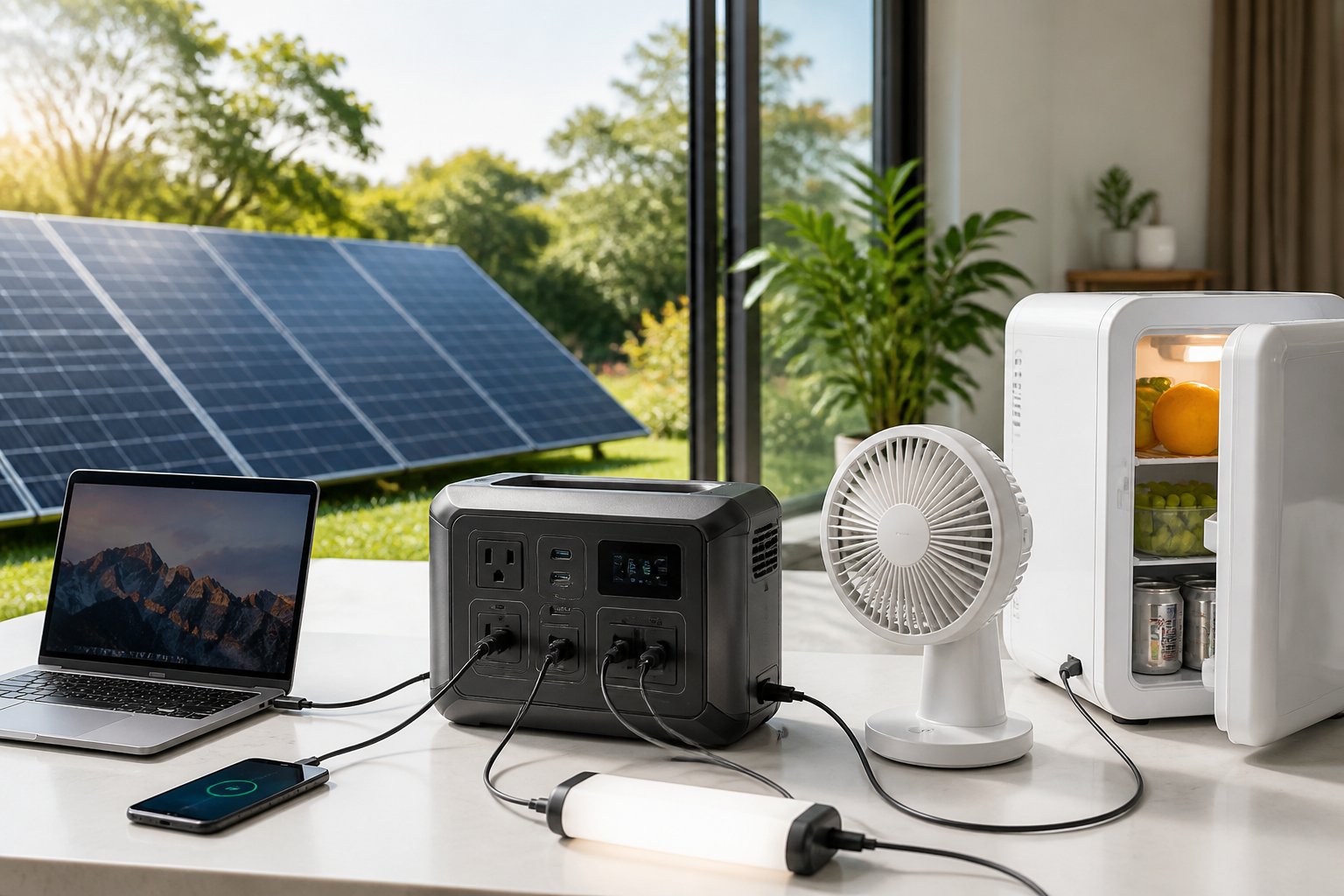
A 500W power station becomes significantly more useful when paired with solar panels and equipped with efficient charging technology. The right combination of solar input capabilities and system features determines whether the unit serves as a basic backup battery or a capable off-grid energy solution.
Solar Charging and MPPT Controllers
MPPT (Maximum Power Point Tracking) controllers extract more energy from solar panels compared to basic PWM controllers, typically improving efficiency by 20-30%. Most modern 500W units like the EcoFlow RIVER 2 and Bluetti EB3A include built-in MPPT technology as standard.
The Jackery Explorer 500 accepts up to 100W of solar input and can recharge from empty in 9-10 hours under ideal conditions. The EcoFlow RIVER 2 supports faster solar charging at 110W maximum input, cutting recharge time to around 6-7 hours with compatible panels.
Solar charging works best with panels that match the station’s voltage range, typically 12-30V for most 500Wh models. Using mismatched panels wastes potential energy or fails to charge the battery pack entirely.
Choosing the Best 500W Portable Power Station
Key selection factors include battery chemistry, charge speed, and outlet variety. LiFePO4 batteries in units like the Bluetti EB3A offer 2,500+ charge cycles versus 500-800 cycles in older lithium-ion models.
Rapid AC charging varies widely. The EcoFlow RIVER 2 reaches 100% in 60 minutes through wall charging, while the Jackery Explorer 500 requires 7-8 hours. Weight ranges from 13-17 pounds across major brands.
Port configuration matters for practical use. Look for models with at least two AC outlets, multiple USB ports (including USB-C PD), and a 12V car outlet for versatility during camping or emergencies.
Integrating with Solar Panels and Home Systems
For basic solar setups, connecting a single 100W panel directly to the power station provides 400-500Wh of daily energy in good sunlight. This keeps the battery pack topped off during extended camping trips or grid outages.
Advanced system integration enables limited home backup functionality. The Bluetti EB3A includes pass-through charging, allowing it to function as a basic UPS for routers and modems during brief outages.
Permanent installations work best with solar panels mounted at fixed angles. A 200W panel array can fully recharge a 500Wh station in 3-4 hours, supporting daily cycling for essential electronics without grid dependence.